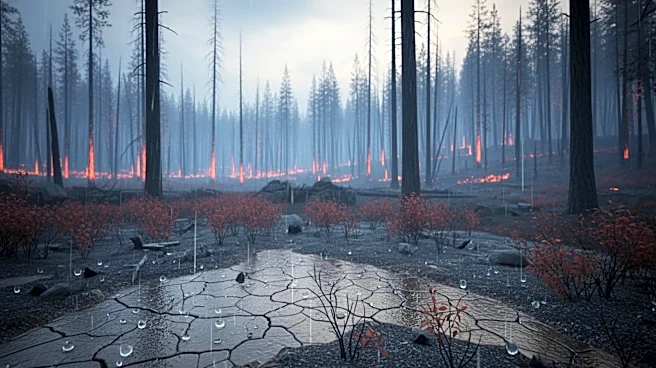




What's Happening?
In Georgia, two significant wildfires continue to pose a threat despite recent rainfall that has aided containment efforts. The fires, located in Brantley County and the sparsely populated Clinch and Echols counties, have collectively destroyed over 80
homes and several smaller structures. The Brantley County fire, which has burned approximately 35 square miles, is now 32% contained, an improvement from the previous 6% containment. Meanwhile, the larger fire in Clinch and Echols counties has charred more than 50 square miles and is 23% contained. The fires were ignited under conditions exacerbated by the state's worst drought in two decades, making the pine forests and swampy lowlands highly combustible. Investigations revealed that the Brantley County fire started when a foil balloon touched a power line, while the Clinch and Echols counties fire was sparked by welding activities. Although no injuries or deaths have been reported in Georgia, a volunteer firefighter in Florida died from a medical emergency while fighting a related blaze.
Why It's Important?
The ongoing wildfires in Georgia highlight the increasing vulnerability of regions to natural disasters exacerbated by climate change and extreme weather conditions. The destruction of homes and displacement of thousands of residents underscore the immediate human and economic impacts. The fires also strain local and state resources, as firefighting efforts require significant manpower and financial investment. The situation is further complicated by rising costs, such as increased jet fuel prices, which elevate the expenses associated with aerial firefighting operations. These events emphasize the need for enhanced wildfire prevention and response strategies, as well as broader discussions on climate resilience and adaptation measures to protect communities and ecosystems.
What's Next?
Forecasts predict more rain over the affected areas, which could aid in further containment of the fires. However, the possibility of thunderstorms raises concerns about new fire ignitions due to lightning. Local officials have lifted some evacuation orders, allowing residents to return home, but they remain on high alert for potential re-evacuations. The long-term resolution of these fires depends on significant rainfall, and officials have not provided a timeline for when the fires might be fully extinguished. The situation calls for continued monitoring and readiness to respond to any changes in fire behavior or weather conditions.