


What's Happening?
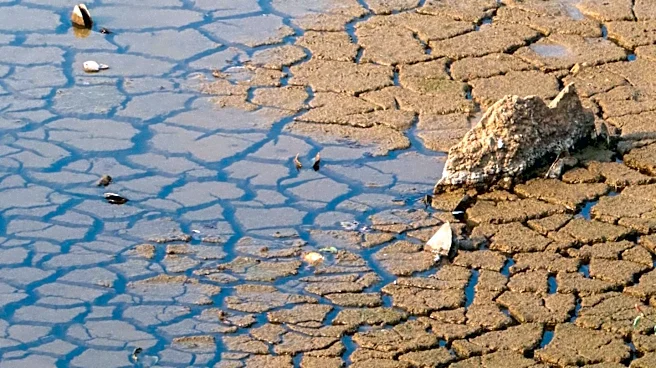
Michael Crawford, the burn boss for The Nature Conservancy in New Hampshire, confirmed that a prescribed burn planned for the Ossipee pine barrens was canceled due to a drought-induced burn ban. Typically, these burns occur in late September or October.
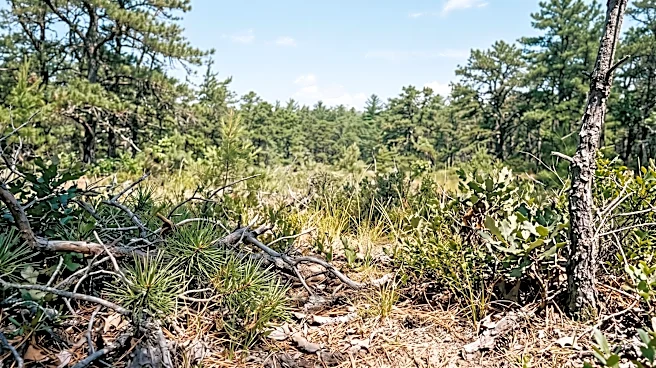
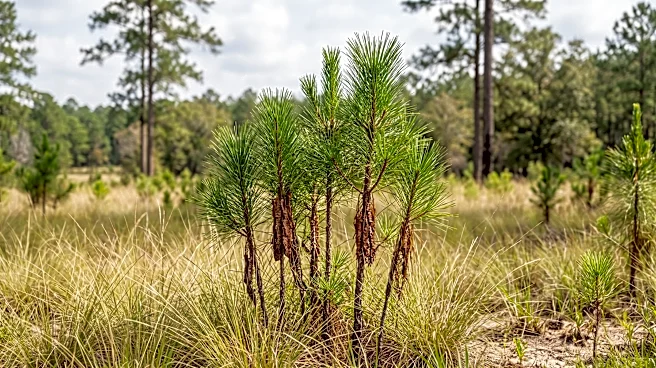
In response to the ban, Crawford and other stewards implemented mechanical treatments, such as cutting back the understory. This method aims to prevent new shrubby growth and maintain the unique pine barren ecosystem. Pine barrens are woodland communities characterized by pitch pine, scrub oak, and grassy areas, supporting dozens of threatened or endangered species. The Ossipee pine barrens, protected by The Nature Conservancy since the late 1980s, are crucial for the Saco-Ossipee Aquifer, New Hampshire’s largest groundwater system.
Why It's Important?
The decision to use mechanical treatments instead of prescribed burns highlights the challenges land managers face in adapting to changing environmental conditions, such as droughts. Pine barrens are fire-adapted ecosystems; pitch pines require fire to release seeds, and scrub oaks regenerate robustly after burns. Suppressing fire for extended periods can alter the species composition, allowing non-fire-adapted species to dominate. The shift to mechanical treatments ensures the continued preservation of this rare habitat, which is vital for unique plant and animal species, including the phyllira tiger moth, Karner blue butterfly, eastern whip-poor-will, and common nighthawk. Maintaining these barrens also protects the Saco-Ossipee Aquifer, a critical source of clean water for both human and wildlife populations in New Hampshire.
What's Next?
Land management strategies for fire-adapted ecosystems like the Ossipee pine barrens will likely continue to evolve in response to climate patterns and drought conditions. The Nature Conservancy and other conservation groups may need to increasingly rely on alternative methods, such as mechanical treatments, when prescribed burns are not feasible. This could lead to further research into the long-term effectiveness and ecological impacts of these alternative approaches. Ongoing monitoring of the pine barrens' biodiversity and aquifer health will be essential to assess the success of these adaptive management practices and inform future conservation efforts in New Hampshire.
Beyond the Headlines
The situation in the Ossipee pine barrens underscores a broader ecological challenge: the increasing frequency and intensity of droughts due to climate change. This forces a reevaluation of traditional land management techniques, particularly those involving fire, which is a natural and necessary process for many ecosystems. The reliance on mechanical treatments, while effective in the short term, raises questions about the long-term ecological integrity of fire-dependent habitats. It also highlights the interconnectedness of environmental issues, where climate change impacts not only specific ecosystems but also critical resources like groundwater, affecting both wildlife and human communities. This adaptation in conservation practices reflects a growing need for flexible and resilient strategies in the face of environmental shifts.