






What's Happening?
On September 30, California Governor Gavin Newsom signed a bill that legalizes and streamlines the adoption of balcony solar technology for residents. This legislation, authored by state Senator Scott Wiener, removes the previous requirement for individuals
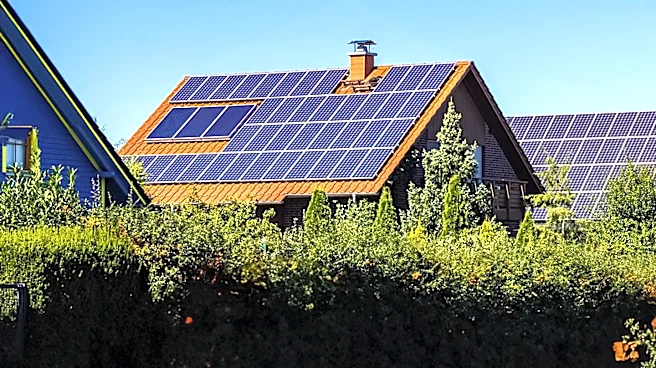
to negotiate interconnection agreements with utility companies like Pacific Gas and Electric Company (PG&E) before installing plug-in solar systems. This move positions California alongside states such as Utah and Maine in embracing this technology, which allows smaller, more affordable solar arrays to be plugged directly into a home's electrical outlets. The aim is to enable residents, including renters, to generate clean electricity, reduce energy costs, and alleviate stress on the electrical grid, particularly during peak demand periods like heat waves. Historically, utilities have relied on fossil fuels to meet demand, but plug-in solar represents a shift towards a more distributed and flexible energy system.
Why It's Important?
This legislative change in California is significant for several reasons. It democratizes access to solar energy, making it more accessible and affordable for a broader segment of the population, including renters who previously faced barriers to solar adoption. By eliminating complex interconnection agreements, the bill reduces bureaucratic hurdles and encourages wider participation in renewable energy generation. This shift is crucial for the U.S. energy landscape, as it promotes a more decentralized grid where individual homes act as 'tiny power plants,' contributing to overall energy supply and reducing reliance on traditional, centralized fossil fuel-based generation. The increased adoption of plug-in solar can help mitigate rising energy costs for consumers and contribute to California's climate goals by reducing carbon emissions. Furthermore, the success of this initiative in California, a leading state in energy policy, could influence other states to adopt similar measures, accelerating the national transition to renewable energy.
What's Next?
Following the signing of this bill, California residents are expected to see an increase in the availability and adoption of plug-in solar systems. The simplified process for installation will likely lead to more homeowners and renters investing in these smaller solar arrays. While the bill removes a major barrier, the state may consider further incentives, such as rebates, to make the technology even more accessible, especially for lower-income households. The long-term impact will involve a gradual transformation of the electrical grid, with a greater emphasis on distributed energy resources. Other states will likely observe California's experience, potentially leading to similar legislative efforts across the country. This development could also spur innovation in the plug-in solar market, leading to more efficient and cost-effective systems.
Beyond the Headlines
The California bill's impact extends beyond immediate energy savings and environmental benefits. It represents a fundamental shift in the relationship between consumers and utility companies, empowering individuals to become more active participants in energy production rather than solely consumers. This move could foster greater energy independence and resilience at the household level. Ethically, it addresses energy equity by making clean energy more accessible to renters and those who cannot afford large-scale rooftop installations. Culturally, it promotes a more sustainable lifestyle and encourages a collective effort towards combating climate change. The long-term implication is a more robust and decentralized energy infrastructure, less vulnerable to single points of failure and more adaptable to fluctuating energy demands and environmental conditions. This legislative action could serve as a blueprint for other regions grappling with energy costs and climate goals.