







What's Happening?
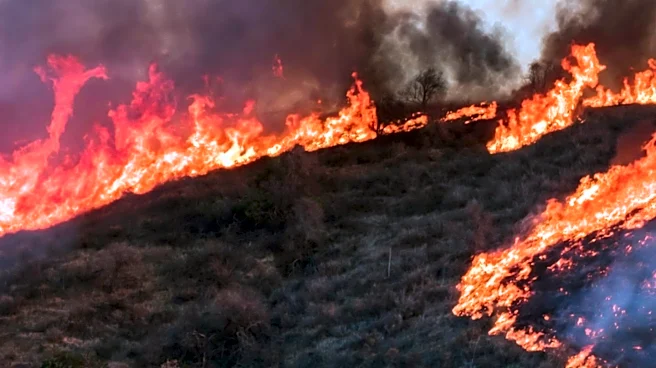
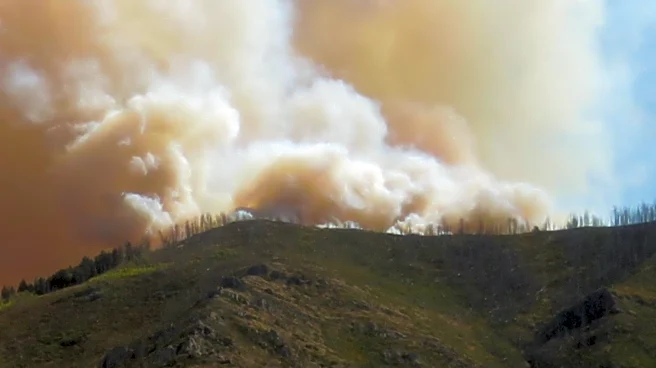
A wildfire ignited on Saturday morning in Casco, Maine, burning through nearly 20 acres near Coffee Pond before fire crews were able to contain it. The blaze was first reported just before 5 a.m. and quickly expanded due to windy conditions and dry weather,
causing it to jump established fire lines. Approximately a dozen fire departments from southern Maine responded to the incident, with aerial crews also dispatched to assist. Videos from North Yarmouth Fire Rescue showed a helicopter scooping water from a nearby lake to douse the flames. Photos and videos from the scene depicted the fire sweeping through underbrush in the woods adjacent to Coffee Pond. By 9 a.m., the fire was reported to be about 90% contained by Casco Fire Rescue. Most of Maine was under a high risk of fires on Saturday, according to the state forest service. The cause of the fire remains unclear.
Why It's Important?
This wildfire in Casco, Maine, underscores the significant risks posed by dry and windy conditions, even in regions not typically associated with large-scale blazes. The rapid spread of the fire, despite its relatively small size, highlights the vulnerability of forested areas to ignition and the challenges faced by emergency services in containment. The involvement of numerous fire departments and aerial support demonstrates the substantial resources required to combat such incidents, placing a strain on local and regional emergency services. For residents in fire-prone areas, this event serves as a stark reminder of the importance of preparedness and adherence to fire safety warnings. The economic impact, though not detailed, can include damage to property, natural resources, and potential disruptions to local tourism or recreational activities around Coffee Pond. The incident also emphasizes the broader implications of climate patterns that contribute to drier conditions, increasing the frequency and intensity of wildfires across the U.S.
What's Next?
Firefighters are expected to remain on site throughout the day to fully extinguish the fire and monitor for any rekindling. Officials have warned residents and hunters to avoid the area for their safety and to allow emergency personnel to complete their work. An investigation into the cause of the fire will likely be initiated to determine its origin, which could inform future prevention strategies. Given that most of Maine was at a high risk of fires on Saturday, authorities will likely continue to issue warnings and implement fire bans or restrictions as weather conditions dictate. This incident may also prompt local authorities to review and update their wildfire response protocols and public awareness campaigns regarding fire safety, especially concerning activities that could inadvertently start fires in dry conditions. The event serves as a localized case study for understanding and mitigating wildfire risks in similar environments.
Beyond the Headlines
The Casco wildfire, while contained, points to a broader environmental concern regarding the increasing susceptibility of regions to fire. The mention of 'windy conditions and dry weather' aligns with observed climate trends that are extending fire seasons and increasing fire danger in many parts of the U.S. This event could contribute to a growing public awareness of climate change impacts at a local level, potentially influencing community-level discussions on land management, forest health, and sustainable development. The reliance on multiple fire departments and aerial resources also highlights the need for robust inter-agency cooperation and adequate funding for emergency services. Furthermore, the incident may subtly shift public perception regarding the 'safety' of certain natural areas, prompting a re-evaluation of recreational activities and residential development in or near forested lands. The unknown cause of the fire also leaves open questions about human activity as a potential trigger, reinforcing the need for public vigilance.