
What's Happening?
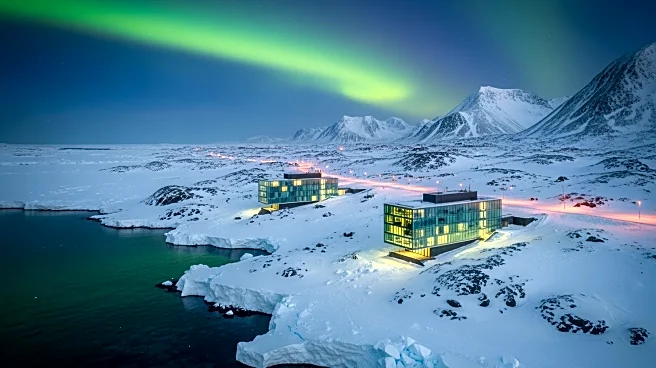
Greenland, an autonomous territory of Denmark, is at the center of a geopolitical tussle involving the United States, Europe, China, and Russia. President Trump has expressed interest in bringing Greenland under
U.S. control, citing its strategic importance. The island's location off the northeastern coast of Canada makes it crucial for defense strategies, and it hosts the U.S. Pituffik Space Base. Greenland's vast natural resources, including rare earth elements (REEs), are highly sought after, especially as the U.S. and EU seek to reduce reliance on China for these materials. Climate change is also affecting Greenland, with rising temperatures and melting ice creating new trade routes and increasing interest in the region.
Why It's Important?
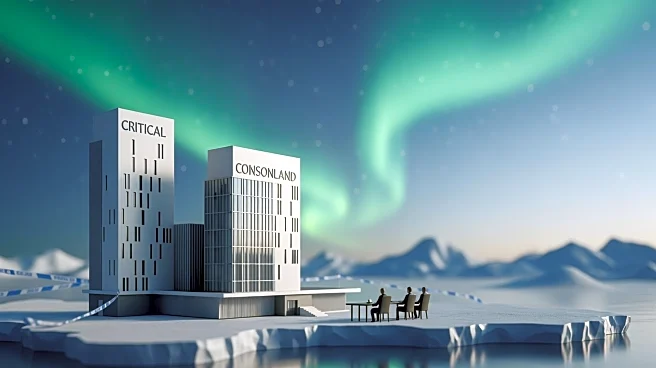
Greenland's geopolitical significance is underscored by its natural resources and strategic location. The island possesses critical raw materials, including REEs, which are essential for various technologies and defense systems. As global powers vie for access to these resources, Greenland becomes a key battleground in reducing dependency on China. Additionally, the melting Arctic ice is opening new trade routes, potentially altering global trade dynamics. The U.S.'s interest in Greenland reflects broader geopolitical strategies to secure resources and maintain influence in the Arctic region.
What's Next?
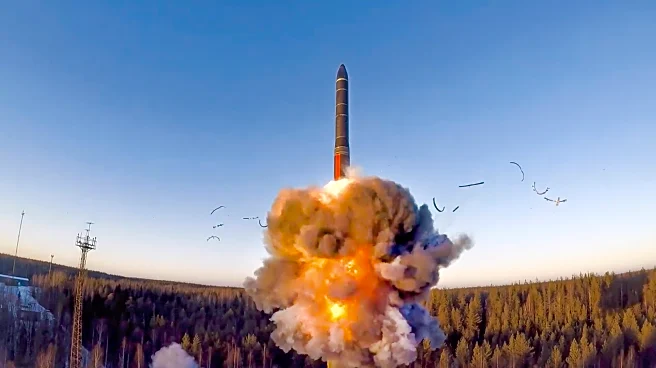
The geopolitical interest in Greenland is likely to intensify as climate change continues to reshape the Arctic landscape. The U.S., along with other global powers, may increase efforts to secure access to Greenland's resources and strategic locations. This could involve diplomatic negotiations, economic investments, and potential military considerations. The evolving situation will require careful management to balance national interests with international cooperation and environmental sustainability.
Beyond the Headlines
Greenland's situation highlights the complex interplay between climate change, resource competition, and geopolitical strategies. The island's sparse population and harsh geography present challenges for resource extraction, but also opportunities for technological and infrastructural development. The global focus on Greenland underscores the need for sustainable practices and international collaboration to address the environmental and geopolitical challenges of the Arctic region.