









What's Happening?
Archbishop John Wester of Santa Fe, New Mexico, has issued a pastoral letter titled 'Uniting for Our Sacred Waters,' urging the faithful to recognize the profound value of water and make 'moral choices' regarding its use. This call comes as New Mexico faces
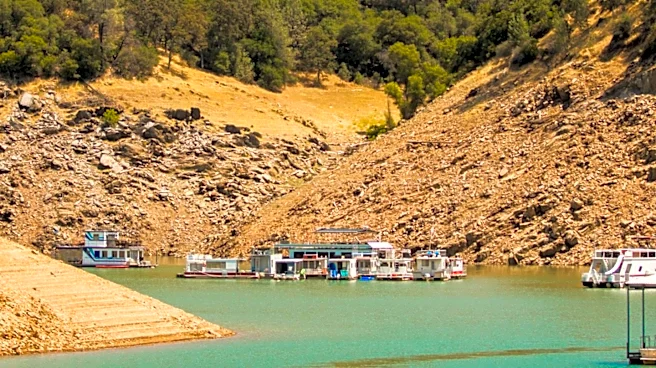
historic droughts and critically low water levels, with the state's largest reservoir, Elephant Butte, reportedly at just 1.4% capacity, its lowest since 1971. Wester's letter emphasizes the spiritual significance of water within the Catholic faith and highlights Pope Francis' warnings about global water scarcity. He also criticizes the 'squandering' of water resources in New Mexico, including groundwater depletion and contamination from military activities and nuclear weapons laboratories.
Why It's Important?
Archbishop Wester's pastoral letter is significant because it elevates water conservation from an environmental issue to a moral imperative, engaging a large religious community in addressing a critical resource challenge. By framing water as a 'sacred gift,' he seeks to inspire a deeper sense of responsibility and stewardship among Catholics and the broader public. This religious perspective can mobilize community action, influence public discourse, and potentially pressure policymakers to adopt more sustainable water management practices. The dire statistics regarding reservoir levels underscore the urgency of the situation, impacting agriculture, public health, and economic stability in the arid U.S. Southwest. The call for accountability for polluters also highlights environmental justice concerns.
What's Next?
The pastoral letter is expected to encourage dialogue and action within the Archdiocese of Santa Fe and potentially beyond. Catholics are urged to reflect on their personal, spiritual, and political lives concerning water conservation. This could lead to increased participation in local water-saving initiatives, advocacy for stronger environmental policies, and community-led efforts to protect water sources. Authorities and industries responsible for water pollution or depletion may face increased public scrutiny and pressure to adopt more sustainable practices. The ongoing drought conditions mean that the issue of water scarcity will remain a central concern for New Mexico, requiring continued attention from religious leaders, government, and citizens alike.
Beyond the Headlines
Archbishop Wester's message extends beyond immediate water conservation, touching upon broader themes of environmental ethics, social justice, and the role of faith in addressing contemporary crises. His previous warnings against nuclear weapons, coupled with this letter on water, demonstrate a consistent stance on issues of human dignity and ecological integrity. This approach suggests a growing trend among religious leaders to engage with complex environmental and social challenges, offering a moral framework for action. The letter also implicitly critiques industrial and military practices that impact natural resources, prompting a deeper examination of the ethical responsibilities of powerful institutions in safeguarding shared environmental goods for future generations.