









What's Happening?
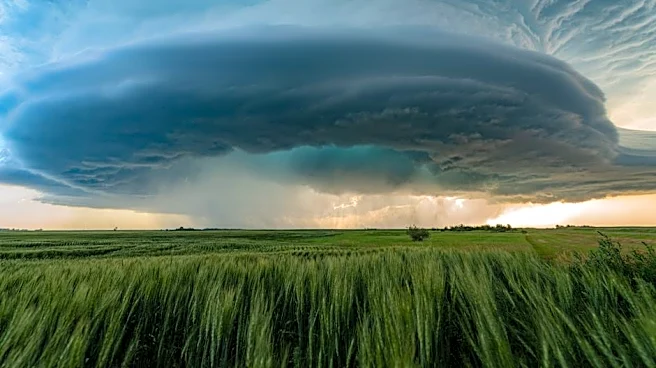
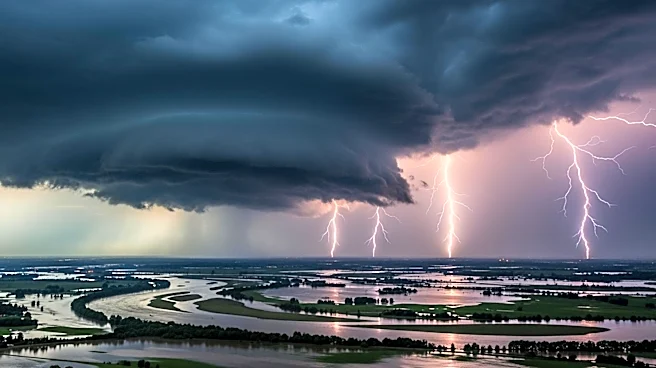
An active weather pattern continues to bring severe thunderstorms and flooding across the central and eastern United States. This pattern, which has been ongoing throughout June, is expected to persist into the upcoming week. The storm system responsible
for recent severe weather, including damaging wind gusts, large hail, and flash flooding, is moving from the Midwest towards the East Coast. Areas from Oklahoma City to St. Louis, which have already experienced multiple rounds of storms, are facing renewed threats. As the storm advances, cities along the Interstate 95 corridor, from Raleigh to Philadelphia, are at risk for severe thunderstorms capable of causing localized flash flooding and travel disruptions. A cold front stretching from the mid-Atlantic to the South is also contributing to the development of thunderstorms, exacerbating flooding concerns in areas with already saturated soils.
Why It's Important?
The ongoing severe weather poses significant risks to communities across the central and eastern U.S., impacting millions of residents. The repeated storms and flooding can lead to property damage, disrupt transportation, and pose safety hazards. The agricultural sector may also be affected, as excessive rainfall can damage crops and delay planting. Additionally, the economic impact of such weather events can be substantial, with potential costs related to infrastructure repair, emergency response, and insurance claims. The persistent nature of the storms highlights the need for effective emergency preparedness and response strategies to mitigate the impact on affected communities.
What's Next?
As the week progresses, the center of severe weather activity is expected to shift back towards the Plains. Subtle disturbances moving out of the Rockies will interact with warm, moisture-rich air, creating conditions for daily rounds of thunderstorms. The risk areas will extend from eastern Colorado into parts of Nebraska, Kansas, and the Oklahoma and Texas panhandles. The primary threats will continue to be large hail and damaging wind gusts. The severe weather threat is anticipated to expand further on Thursday, affecting a broader portion of the Plains, including the Oklahoma City metropolitan area and eastern Montana.