





What's Happening?
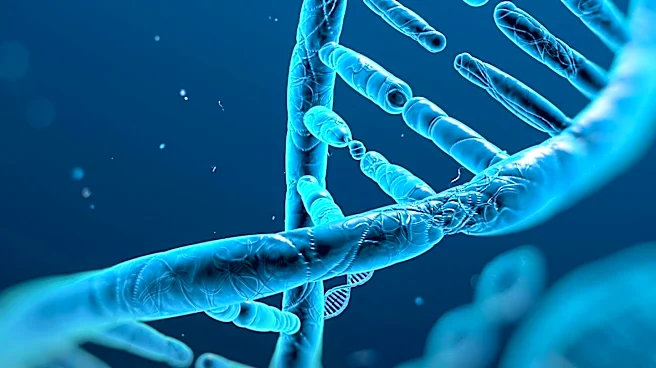
A study by researchers at Berkeley has identified a 'ghost lineage' in the DNA of modern humans, suggesting interbreeding with an unknown hominin group before Homo sapiens left Africa. This lineage, which diverged from modern humans over 800,000 years
ago, has left genetic traces in the human genome. The discovery was made using advanced genomic analysis techniques, which revealed that this ancient DNA is present in regions of the genome that lack Neanderthal and Denisovan DNA. The findings indicate a complex history of human evolution involving multiple interbreeding events with different hominin groups.
Why It's Important?
The identification of a ghost lineage in human DNA adds a new dimension to our understanding of human evolution. It suggests that the genetic history of modern humans is more intricate than previously thought, involving interactions with multiple archaic human groups. This has implications for the study of human genetic diversity and adaptation, as these interbreeding events may have introduced beneficial genetic variations. The research also highlights the potential for further discoveries of unknown human lineages, which could provide new insights into the evolutionary history of our species.