



What's Happening?
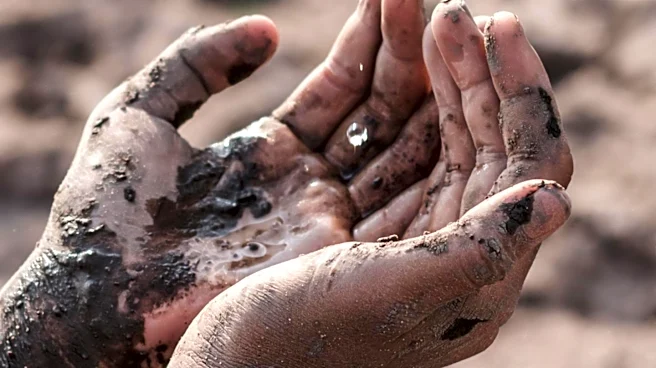
West Africa is grappling with a significant drinking water crisis, with UN data from World Water Day 2026 indicating that only 24% of people in sub-Saharan Africa have access to safely managed drinking water. This means water that is on the premises,
free from contamination, and consistently available. The International Water Management Institute reports that over 400 million Africans in West and Central Africa lack safely managed drinking water. The Sahel region is particularly affected, with less than a third of its rural population having access to resilient water services. For instance, in Niger in 2024, 47% of the population lacked basic drinking water services. Climate change exacerbates this issue by reducing water availability and degrading its quality, leading to increased instances of waterborne diseases like cholera, as seen in outbreaks across six West and Central African countries in August 2026.
Why It's Important?
The pervasive lack of safe drinking water in West Africa has far-reaching implications for public health, economic development, and regional stability. Unsafe water is a primary driver of disease, with cholera outbreaks frequently occurring, particularly after flooding contaminates water sources. This places immense strain on healthcare systems and disproportionately affects vulnerable populations, especially children. Economically, the crisis hinders productivity and development, as resources are diverted to address health emergencies and communities struggle with the basic necessity of clean water. The issue also contributes to social instability, as citizens express dissatisfaction with government provision of water and sanitation, with Afrobarometer finding water to be a top concern in countries like Guinea and Benin. The interconnectedness of water with health, food security, education, migration, and conflict underscores its critical role in the region's overall well-being.
What's Next?
Addressing West Africa's water crisis will require substantial investment and coordinated efforts. Experts are calling for at least US$440 billion annually in blended finance, climate funds, and sovereign wealth mechanisms to tackle the continental water and sanitation challenges. Practical priorities for the sub-region include protecting water catchments by combating illegal mining pollution and open defecation upstream. There is also a critical need to fund rural water points with robust maintenance plans to ensure long-term functionality of boreholes. Furthermore, building cross-border cholera surveillance systems is essential, as outbreaks often spread with trade and floods. Implementing fair tariffs and subsidies for water services is crucial to prevent poor households from bearing the brunt of high costs for unsafe water. These measures aim to improve access to safe drinking water and mitigate the associated health and socio-economic impacts.
Beyond the Headlines
The water crisis in West Africa extends beyond immediate health concerns, touching upon deeper issues of environmental justice, governance, and climate resilience. Illegal mining, or 'galamsey,' in coastal states like Ghana, exemplifies how environmental degradation directly impacts water quality and accessibility, making treatment costlier and exposing rural communities to contaminated sources. This highlights a systemic challenge where economic activities, often unregulated, undermine fundamental human rights to clean water. The persistent reliance on sachet water and untreated wells in communities like Monrovia's Slipway in Liberia, due to funding limits and land disputes, points to governance failures and the complex interplay of social, economic, and political factors in water provision. The crisis also underscores the disproportionate impact of climate change on vulnerable regions, necessitating a global re-evaluation of climate adaptation funding and support for developing nations.