
What's Happening?
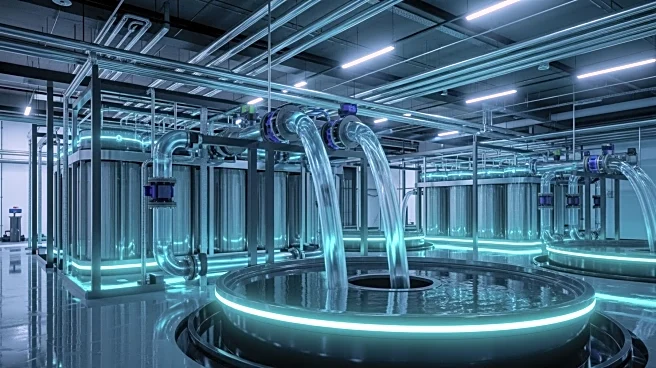
Uttar Pradesh Chief Minister Yogi Adityanath has announced a comprehensive initiative aimed at achieving 100% safe reuse of wastewater by 2035. The plan involves a phased approach to expand capacity and infrastructure
for wastewater treatment across the state. By 2030, the goal is to reuse 50% of wastewater in areas with existing treatment facilities, and by 2035, to achieve full reuse. This initiative is part of a broader strategy to position Uttar Pradesh as a leader in water security and sustainable development. The treated wastewater will be used for municipal operations, industrial applications, agriculture, and non-potable domestic purposes, reducing reliance on groundwater and promoting environmental balance.
Why It's Important?
The initiative is significant as it addresses the growing pressure on water resources in Uttar Pradesh, a state with a large population and significant agricultural and industrial activities. By reusing wastewater, the state aims to conserve groundwater, which is crucial for maintaining ecological balance and supporting sustainable development. This policy could serve as a model for other regions facing similar water scarcity issues. Economically, the reuse of wastewater can reduce costs associated with water procurement and treatment, providing long-term financial benefits. Environmentally, it supports river conservation efforts and enhances the state's resilience to climate change impacts.
What's Next?
The plan will be implemented in phases, with the first phase focusing on areas with existing sewage treatment infrastructure. The second phase will expand capacity to achieve full reuse by 2035. In regions lacking treatment systems, infrastructure development will occur in stages, aiming for incremental increases in reuse. The state government will develop separate strategies for urban, rural, and non-potable applications, ensuring comprehensive coverage. Stakeholders, including municipal authorities, industries, and agricultural sectors, are expected to collaborate closely to achieve these targets.
Beyond the Headlines
This initiative could lead to a cultural shift in how wastewater is perceived, transforming it from a waste product to a valuable resource. It may also prompt advancements in wastewater treatment technologies and encourage innovation in sustainable water management practices. The policy highlights the importance of integrating environmental sustainability into economic planning, potentially influencing national policies on water conservation and management.