








What's Happening?
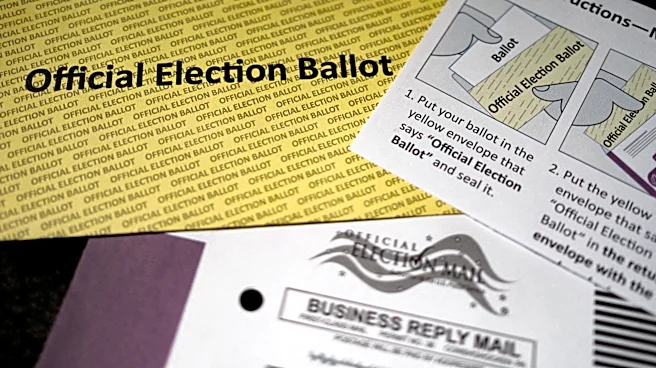
Final results from Alaska's August primary election indicate a strong likelihood that existing coalition majorities in both the state House and Senate will continue into 2027, with potential for growth. Alaska is unique as the only U.S. state where both legislative
chambers are controlled by coalitions comprising Democrats, independents, and Republicans, necessitating bipartisan negotiation. In the certified primary results, coalition-leaning candidates led in 24 of 40 state House races. The current House coalition includes 21 lawmakers. In the state Senate, where 10 of 20 seats are up for election, coalition members or inclined candidates are leading in seven races, with seven other coalition members not up for re-election this year. This trend suggests a continuation of the current legislative dynamics.
Why It's Important?
The likely continuation of coalition majorities in the Alaska Legislature has significant implications for the state's governance. These coalitions dictate the legislative agenda, including committee chair assignments and which bills advance. This structure often leads to bipartisan and multipartisan negotiations and compromises, which can be both a strength and a challenge. In the 34th Alaska State Legislature, conflicts between the coalition-led body and Governor Mike Dunleavy, a conservative Republican, resulted in a record number of vetoes and unresolved major issues, such as a proposed trans-Alaska natural gas pipeline, education funding, and long-term fiscal planning. The upcoming legislative session will likely see similar dynamics, impacting policy decisions across various sectors.
What's Next?
With the primary results setting the stage, the focus now shifts to the November general election, where these coalition-leaning candidates will seek to secure their seats. The outcomes will determine the final composition of the Alaska House and Senate for the 2027 legislative session. Should the coalition majorities solidify as projected, the next legislative session will likely continue the pattern of bipartisan negotiation and potential friction with the Governor's office on key policy areas. Stakeholders, including political leaders, advocacy groups, and the public, will closely watch the general election results to understand the future direction of state policy and governance in Alaska.
Beyond the Headlines
The persistent presence of coalition majorities in Alaska's legislature reflects a unique political culture that prioritizes cross-party collaboration, or at least necessitates it, given the state's diverse political landscape. This system, while fostering compromise, can also lead to legislative gridlock when consensus is difficult to achieve, particularly with a governor from a different political alignment. The emphasis on coalitions over strict party-line voting suggests a pragmatic approach to governance in a state with distinct regional interests and a relatively small population. This model offers a case study in how non-traditional political alliances can shape legislative outcomes and influence the balance of power within a state government, potentially offering insights into broader trends of political realignment and cooperation.