

What's Happening?
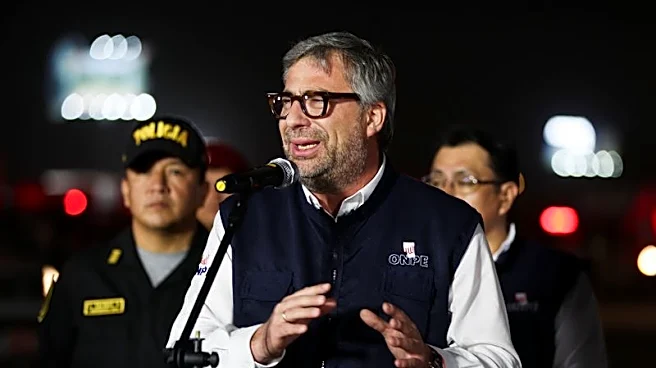
Peru's electoral tribunal has mandated that the country's elections agency, ONPE, complete the vote count for the presidential election by May 15. This decision comes after a highly contested election held on April 12, where more than 30 candidates participated.
The top two candidates will advance to a runoff on June 7, as no candidate secured more than half of the votes. Currently, conservative leader Keiko Fujimori leads with 17.05% of the vote, followed by nationalist congressman Roberto Sánchez with 12%, and ultraconservative former mayor Rafael López Aliaiga with 11.91%. The election has been marred by irregularities, prompting authorities to extend voting in some Lima stations and review hundreds of challenged tally sheets. The winner will become Peru's ninth president in a decade, succeeding interim president José María Balcázar.
Why It's Important?
The outcome of Peru's presidential election is crucial for the country's political stability, as it has seen frequent leadership changes, with nine presidents in ten years. The election's irregularities and the close race between candidates highlight the challenges in ensuring a transparent electoral process. The new president will face the task of addressing political corruption and restoring public trust in government institutions. The election results could also influence Peru's economic policies and international relations, particularly with neighboring countries and trade partners. The political landscape in Peru is at a critical juncture, and the election's resolution will have significant implications for its future governance.
What's Next?
Following the May 15 deadline, the two leading candidates will prepare for the runoff election scheduled for June 7. The electoral tribunal and ONPE will need to address the irregularities and ensure a fair and transparent process to maintain public confidence. Political parties and candidates are likely to intensify their campaigns, focusing on key issues such as corruption, economic recovery, and social policies. International observers may continue to monitor the situation to ensure compliance with democratic standards. The political climate in Peru will remain tense as stakeholders await the final election outcome.