



What's Happening?
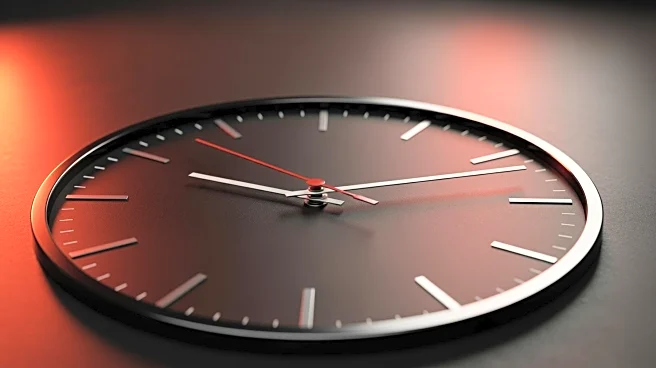
The Doomsday Clock, a symbolic representation of humanity's proximity to global catastrophe, has been set to 85 seconds to midnight, marking the closest it has ever been to a theoretical apocalypse. This adjustment was announced by the Bulletin of the Atomic
Scientists, a group comprising world leaders and Nobel laureates, on January 27, 2026. The decision to move the clock forward reflects heightened concerns over nuclear weapons, climate change, and biological threats. The clock's new setting is four seconds closer to midnight than in 2025, when it was at 89 seconds. Historically, the clock has been adjusted to reflect changes in global security and environmental conditions, with its farthest retreat from midnight occurring in 1991, following significant nuclear arms reductions.
Why It's Important?
The adjustment of the Doomsday Clock underscores the increasing urgency for global cooperation to address existential threats. The closer setting highlights the growing dangers posed by nuclear proliferation, environmental degradation, and emerging biological risks. This serves as a stark reminder of the need for international dialogue and policy action to mitigate these threats. The clock's movement is a call to action for governments, organizations, and individuals to prioritize security and sustainability. The symbolic nature of the clock aims to raise public awareness and encourage proactive measures to prevent potential global disasters.
What's Next?
The new setting of the Doomsday Clock is likely to prompt discussions among global leaders and policymakers about strategies to address the identified threats. It may lead to renewed efforts in nuclear disarmament, climate change mitigation, and the strengthening of international health systems. The Bulletin of the Atomic Scientists' announcement could also influence public opinion and advocacy, driving support for policies that enhance global security and environmental protection. Continued monitoring and reassessment of the clock's setting will depend on future developments in these critical areas.
Beyond the Headlines
The Doomsday Clock serves as more than just a measure of global risk; it is a cultural and ethical symbol that challenges humanity to reflect on its technological advancements and their potential consequences. The clock's history, rooted in the atomic age, highlights the ongoing tension between scientific progress and the ethical responsibility to use such advancements for the betterment of society. As the clock edges closer to midnight, it raises questions about the balance between innovation and caution, urging a reevaluation of how societies prioritize and manage technological and environmental challenges.