






What's Happening?
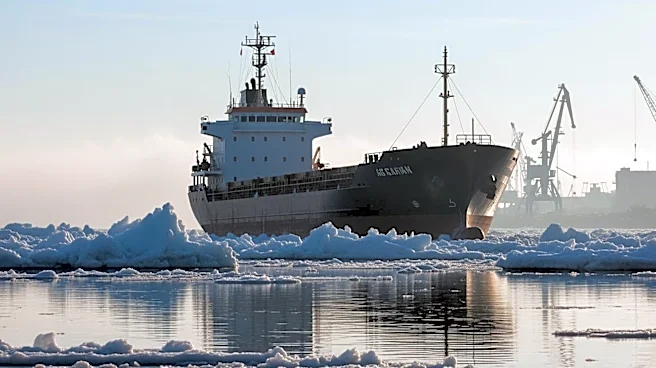
The first ocean vessel of the season, the Motor Vessel Ocean7 Ranger, arrived at the Port of Duluth-Superior on April 8, marking the opening of the Duluth-Superior Harbor for the year. The Netherlands-built cargo ship faced ice conditions throughout its
journey via the St. Mary's River and Whitefish Bay. To assist with navigation, six U.S. Coast Guard vessels and three Canadian Coast Guard vessels were deployed for icebreaking operations. The Ocean7 Ranger, equipped with twin cranes and a tandem lift capacity of approximately 500 tons, sailed from Taiwan and passed through the Pacific Ocean, Panama Canal, and the Great Lakes-St. Lawrence Seaway System. Its cargo for Duluth includes 30 pieces of project cargo, with the heaviest weighing over 11,500 freight tons.
Why It's Important?
The arrival of the first ocean-going vessel at the Port of Duluth-Superior is a significant event for the region's shipping and trade activities. It signals the start of the interlake navigation season, which is crucial for the transportation of goods and materials across the Great Lakes. The deployment of icebreaking vessels underscores the challenges posed by lingering ice conditions, which can impact shipping schedules and logistics. The successful transit of the Ocean7 Ranger highlights the importance of coordinated efforts between U.S. and Canadian authorities to ensure safe and efficient navigation in icy waters.
What's Next?
As the shipping season progresses, continued monitoring and icebreaking operations may be necessary to maintain clear navigation routes. The Port of Duluth-Superior will likely see increased activity as more vessels arrive, contributing to the regional economy. Stakeholders in the shipping industry will be closely watching weather conditions and ice patterns to plan future transits. The collaboration between U.S. and Canadian coast guards may serve as a model for managing similar challenges in other parts of the Great Lakes.