




What's Happening?
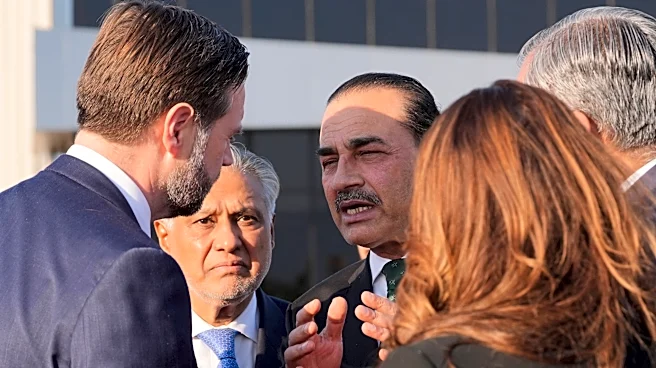
Pakistan's military chief, Field Marshal Asim Munir, completed a three-day visit to Tehran, where he engaged with top Iranian leaders and negotiators. The visit aimed to facilitate a negotiated settlement to the ongoing Middle East conflict. During his
stay, Munir met with Iran's president, foreign minister, parliament speaker, and the head of Iran's military central command. The discussions underscored Pakistan's commitment to promoting peace, stability, and prosperity in the region. This visit comes ahead of anticipated US-Iran talks in Islamabad, following a recent round of peace talks that ended without an agreement. Pakistan's prime minister is also actively involved, having recently toured Saudi Arabia, Qatar, and Turkey to support the peace process.
Why It's Important?
The visit by Pakistan's military chief to Iran is significant as it highlights Pakistan's role as a mediator in the Middle East conflict. The involvement of high-level officials from both Iran and Pakistan indicates a serious commitment to finding a peaceful resolution. This development could potentially ease tensions in the region, especially with the upcoming US-Iran talks in Islamabad. Successful mediation could enhance Pakistan's diplomatic standing and contribute to regional stability, which is crucial for global economic and security interests. The outcome of these efforts could impact international relations and trade routes, particularly if the Strait of Hormuz remains open for commercial vessels.
What's Next?
A second round of US-Iran talks is expected to take place in Islamabad in the coming week. The continuation of diplomatic engagements suggests that both parties are open to dialogue, despite previous talks ending without an agreement. The international community will be closely monitoring these developments, as any progress could lead to a de-escalation of tensions in the Middle East. Additionally, Iran's recent threat to close the Strait of Hormuz if the US continues its blockade adds urgency to these negotiations. The outcome of these talks could influence future diplomatic strategies and regional alliances.