


What's Happening?
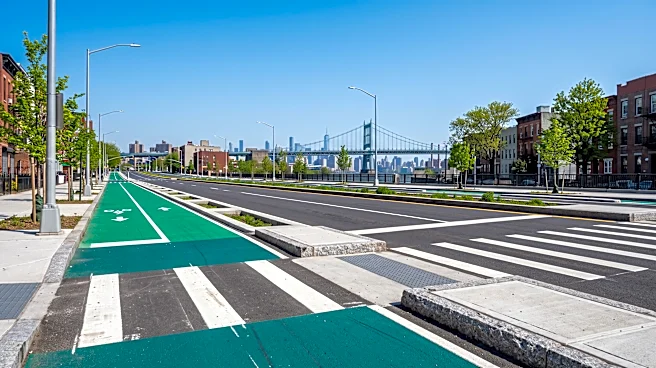
Mayor Zohran Kwame Mamdani and New York City Department of Transportation (NYC DOT) Commissioner Mike Flynn have announced the completion of the McGuinness Boulevard redesign in Greenpoint, Brooklyn. The project delivers parking-protected bike lanes along
the entire corridor, from Meeker Avenue to the Pulaski Bridge. This redesign aims to enhance safety for pedestrians, cyclists, and drivers by shortening pedestrian crossing distances, slowing turning vehicles, and preventing dangerous driving. The improvements also provide a protected connection for thousands of cyclists traveling through Greenpoint. Mayor Mamdani had committed to completing the original redesign shortly after his inauguration in January, a project long championed by neighborhood residents and advocates, particularly the 'Make McGuinness Safe' coalition, following traffic fatalities on the boulevard.
Why It's Important?
The completion of the McGuinness Boulevard redesign is a significant victory for street safety advocates and Greenpoint residents who have campaigned for years to make the corridor safer. This project addresses a critical public safety concern, as McGuinness Boulevard previously experienced frequent traffic crashes. By implementing parking-protected bike lanes and other traffic calming measures, the city aims to reduce accidents and fatalities, thereby improving the quality of life for those who live, work, and travel through Greenpoint. This initiative also signals a commitment from Mayor Mamdani's administration to prioritize community-led safety demands and deliver on promises made during his early tenure. The redesign serves as a model for urban planning that integrates safety, accessibility, and community input into infrastructure development.
What's Next?
With the redesign complete, the focus will shift to monitoring the effectiveness of the new infrastructure in improving safety and traffic flow on McGuinness Boulevard. NYC DOT will likely collect data on accident rates, pedestrian and cyclist usage, and traffic patterns to assess the project's impact. Community groups and residents will continue to observe the changes and advocate for any further adjustments if needed. The successful completion of this project may also encourage similar street safety initiatives in other parts of New York City, particularly in areas with high traffic accident rates. This project sets a precedent for how community advocacy can influence significant urban infrastructure changes under the current administration.
Beyond the Headlines
The McGuinness Boulevard redesign highlights the power of sustained community organizing in influencing urban policy and infrastructure development. The 'Make McGuinness Safe' coalition's persistent advocacy, spurred by tragic traffic fatalities, ultimately led to this significant safety improvement. This case demonstrates how local governments can be responsive to citizen demands, especially when those demands are well-organized and address critical public safety issues. Furthermore, the project reflects a broader shift in urban planning towards prioritizing vulnerable road users—pedestrians and cyclists—over solely optimizing vehicle throughput. This approach aims to create more livable, equitable, and sustainable urban environments, potentially inspiring similar transformations in other dense urban corridors across the nation.