

What's Happening?
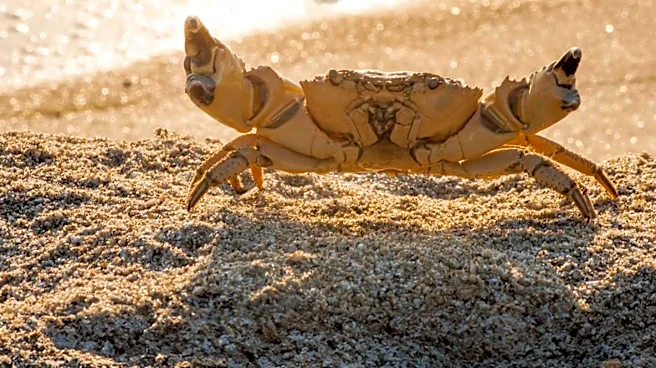
Environmental groups, including the Center for Biological Diversity, are urging New Jersey regulators to investigate Limuli Laboratories, a biomedical company accused of killing hundreds of horseshoe crabs. The groups claim that the company's practices
violate state regulations requiring crabs to be released unharmed. The call for action follows reports that the company injures thousands of crabs annually, with many not surviving. The environmentalists argue that New Jersey, known for its protective laws, must enforce these regulations to safeguard the crabs and the endangered birds that rely on them.
Why It's Important?
The issue highlights the tension between biomedical research and environmental conservation. Horseshoe crabs are vital for medical research due to their unique blood, which is used to test for bacterial contamination in medical equipment. However, their declining populations pose a threat to the ecosystem, particularly to migratory birds like the red knot, which depend on crab eggs for sustenance. The outcome of this case could set a precedent for how states balance economic interests with environmental protection, potentially influencing policies on wildlife conservation and biomedical practices.
What's Next?
If New Jersey's Department of Environmental Protection decides to take action, it could lead to stricter enforcement of existing regulations or the introduction of new measures to protect horseshoe crabs. This may involve increased monitoring of biomedical companies and the implementation of more sustainable harvesting practices. The decision could also prompt other states to reevaluate their policies on wildlife conservation in the context of biomedical research. Stakeholders, including environmentalists, the biomedical industry, and policymakers, will likely engage in discussions to find a balanced approach that addresses both conservation and research needs.