
What's Happening?
Indigenous communities in the Cordillera region of the Philippines are employing agroecological practices to combat the effects of the climate crisis and preserve their ancestral forests. Led by Daniel
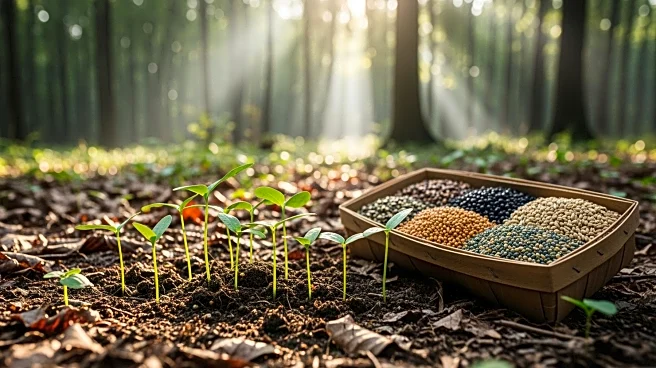
Maches and the Sokodevi non-profit, these communities are integrating coffee cultivation into the rainforest, rather than clearing land for plantations. This approach not only protects the ecosystem but also revitalizes cultural traditions. The project, launched in 2021, aims to serve as a model for climate resilience and forest protection. By growing coffee under native trees, the community maintains biodiversity and protects the ecosystem from the adverse effects of monoculture expansion, illegal hunting, and logging. The initiative also involves replanting native tree species and ancestral food crops, creating a 'food forest' that strengthens biodiversity and cultural identity. Despite challenges such as unpredictable weather and increased frequency of natural disasters, the community's commitment to agroecology has enhanced their resilience.
Why It's Important?
This initiative is significant as it demonstrates a sustainable model for addressing the climate crisis while preserving cultural heritage. By integrating coffee cultivation with forest conservation, the community not only protects biodiversity but also secures their livelihoods against climate-induced challenges. The project highlights the importance of Indigenous knowledge in developing resilient agricultural practices that can withstand extreme weather conditions. This approach not only benefits the local ecosystem but also provides a blueprint for other communities facing similar environmental and economic pressures. The success of this model could influence broader agricultural policies and encourage the adoption of agroecological practices globally, promoting both environmental sustainability and cultural preservation.
What's Next?
The community plans to continue expanding their agroecological practices and engage more young farmers in the initiative. By demonstrating the economic viability and sustainability of agroecological farming, they aim to inspire other producers to adopt similar practices. The project also seeks to preserve traditional foodways and crop varieties threatened by modern agricultural practices. As the community shares their model at international forums like Terra Madre, they hope to influence global agricultural policies and promote the integration of Indigenous knowledge in climate resilience strategies. Continued collaboration with organizations like Slow Food will be crucial in expanding these efforts and ensuring the long-term success of the initiative.
Beyond the Headlines
The project underscores the critical role of Indigenous knowledge in addressing global challenges like climate change. By valuing traditional practices and cultural heritage, the initiative not only enhances environmental resilience but also strengthens community identity and cohesion. This approach challenges conventional agricultural models that prioritize short-term economic gains over long-term sustainability. It also raises important ethical considerations about land use and the rights of Indigenous peoples to manage their ancestral territories. As the climate crisis intensifies, such community-led initiatives could become increasingly vital in shaping sustainable development policies and practices worldwide.