



What's Happening?
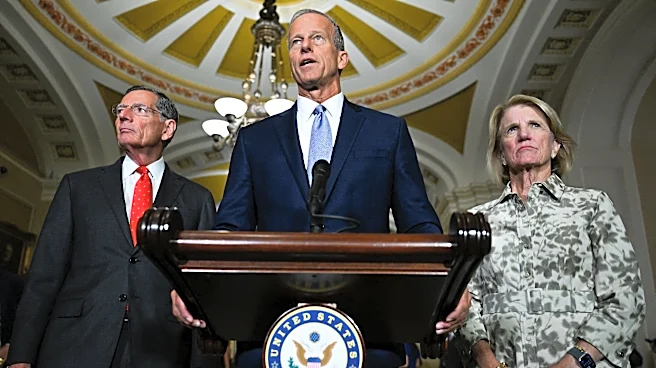
The U.S. Senate is grappling with a packed legislative agenda as it approaches its August recess. Key issues include the potential passage of the Save America Act, a voter administration bill tied to budgetary considerations. Senate Majority Leader John
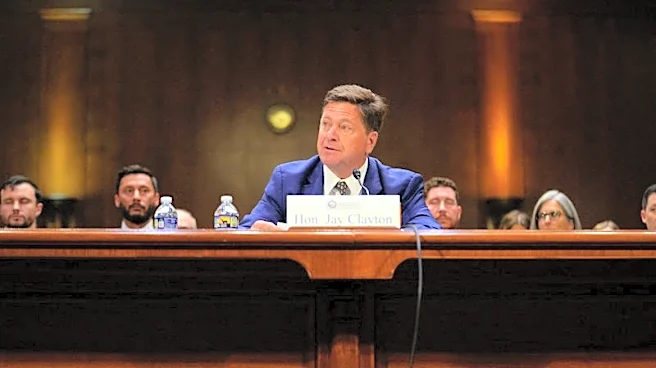
Thune has expressed skepticism about the bill's passage without a clear path to 50 votes. Meanwhile, the Senate has made progress on other fronts, such as confirming Jay Clayton as the full-time director of national intelligence and advancing a package of 74 nominees. However, the nomination of Todd Blanche as attorney general has stalled due to Republican concerns over a $1.8 billion anti-weaponization fund. The Senate is also working on a continuing resolution to fund the government, with bipartisan efforts to finalize the details before the recess.
Why It's Important?
The Senate's actions have significant implications for U.S. governance and public policy. The Save America Act, if passed, could impact voter administration and election processes, a critical issue in the current political climate. The confirmation of key positions, such as the director of national intelligence, affects national security and intelligence operations. The ongoing budget discussions and the potential government funding resolution are crucial to avoiding a government shutdown, which would have widespread economic and social consequences. The legislative decisions made in this period will shape the political landscape leading up to the midterm elections, influencing voter perceptions and party strategies.
What's Next?
As the Senate continues its work, the focus will be on securing enough votes for key legislation, particularly the Save America Act and the continuing resolution. The outcome of these efforts will determine whether the Senate can adjourn for the August recess as planned. The political dynamics within the Senate, including bipartisan negotiations and intra-party disagreements, will play a critical role in shaping the legislative outcomes. The Senate's actions will also set the stage for the upcoming midterm elections, with both parties seeking to leverage legislative successes or failures to their advantage.