



What's Happening?
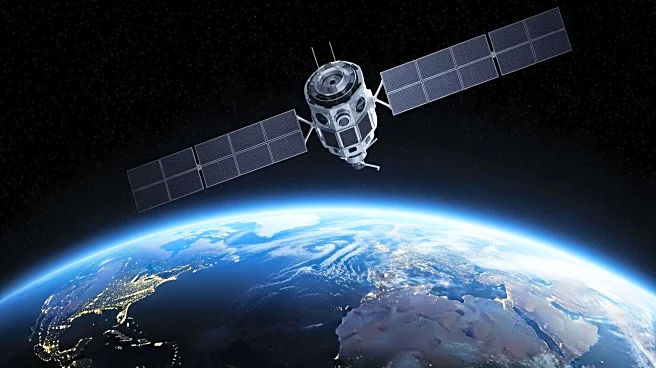
NASA has selected the Earth Dynamics Geodetic Explorer (EDGE) mission as part of its Earth System Explorers (ESE) program. This mission, led by the University of California San Diego, aims to improve understanding of Earth's systems and enhance capabilities
to predict environmental events and mitigate disasters. The EDGE satellite will be the first global satellite imaging laser altimeter system, providing high-resolution, three-dimensional observations of land, vegetation, ice, and coastal regions. Matt Siegfried, an associate professor of geophysics at the Colorado School of Mines, is a co-investigator for the mission. He will focus on designing data products for glaciers, ice sheets, and permafrost, and will lead the validation of ice elevation data products. The mission is expected to launch no earlier than 2030, pending a NASA confirmation review in 2027.
Why It's Important?
The EDGE mission represents a significant advancement in satellite technology, offering unprecedented resolution and accuracy in mapping Earth's surface. This capability is crucial for understanding the dynamics of terrestrial ecosystems and polar regions, which are vital for global environmental monitoring. The data collected will support national security, global transportation, water resource planning, and risk management. By providing strategic environmental intelligence, the mission will aid policymakers in making informed decisions. The involvement of a diverse team of scientists and engineers highlights the collaborative effort to address global environmental challenges.
What's Next?
The EDGE mission will undergo a NASA confirmation review in 2027 to assess its progress and funding availability. If confirmed, the mission will proceed towards a launch date no earlier than 2030. The development phase will involve refining the satellite's technology and ensuring its readiness for deployment. The mission's success will depend on the continued collaboration among international scientists and engineers, as well as the support from NASA and other stakeholders. The outcomes of this mission could influence future satellite missions and environmental monitoring strategies.