





What's Happening?
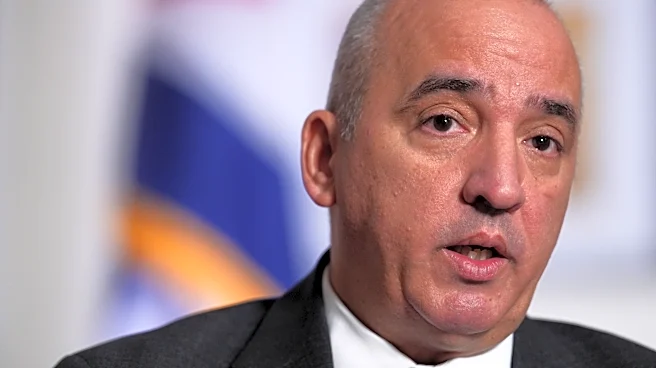
The Log Cabin Republicans, a conservative gay rights organization, has announced it will now operate as an 'LGB' advocacy group, effectively removing 'transgender' from its core mission. This decision, made by the organization's board of directors, is attributed
to a 'new era of gender identity politics,' according to Log Cabin Republicans president Ross Hemminger. The move aligns with policies enacted by President Trump's administration since his return to office in 2025, which have included bans and restrictions targeting transgender Americans. Hemminger's op-ed criticized the transgender movement for focusing on minors, promoting 'radical gender ideology' in schools, advocating for biological males in women's sports, and supporting gender reassignment treatments for minors without parental consent. Critics, including LGBTQ Nation and the Human Rights Campaign, have described these comments as 'untrue and inflammatory' and accused the group of 'fear-mongering.'
Why It's Important?
This shift by the Log Cabin Republicans signifies a notable realignment within the conservative LGBTQ+ movement in the U.S. By distancing itself from transgender issues, the group is explicitly endorsing President Trump's hardline stance on gender identity, which includes directives recognizing only two sexes and seeking to exclude transgender athletes from female sports. This move could further fragment the broader LGBTQ+ rights movement, creating a divide between those who prioritize gay and bisexual rights and those who advocate for the full spectrum of LGBTQ+ identities. For transgender Americans, this represents a loss of a potential ally within conservative circles and reinforces the political challenges they face. The decision also highlights the increasing politicization of gender identity, with implications for public policy, education, and sports across the nation. It could embolden other conservative groups to adopt similar positions, further entrenching the debate over transgender rights in the U.S. political landscape.
What's Next?
The Log Cabin Republicans' decision is likely to provoke further debate and criticism from LGBTQ+ advocacy groups and civil rights organizations, who view it as a divisive and harmful move. This internal split within the LGBTQ+ community could impact future legislative efforts and political strategies related to LGBTQ+ rights. The group's alignment with President Trump's policies suggests they will likely support and advocate for similar measures in the future, potentially influencing conservative political discourse and policy-making. The Human Rights Campaign's statement, warning against sacrificing one part of the community, indicates that the broader LGBTQ+ movement will likely continue to advocate for the inclusion and protection of transgender individuals, potentially leading to increased tensions and opposition between these groups. The focus on 'gender ideology' in schools and sports will likely remain a contentious issue in upcoming political campaigns and policy discussions.
Beyond the Headlines
The Log Cabin Republicans' decision to exclude 'transgender' from its advocacy reflects a deeper ideological struggle within conservative thought regarding individual liberty and traditional values. While the group historically advocated for gay and lesbian rights based on principles of individual freedom, its current stance suggests a prioritization of certain conservative social values over the inclusive definition of LGBTQ+ rights. This move raises questions about the limits of 'conservatism' within the LGBTQ+ community and whether certain identities are deemed more acceptable than others. Ethically, the decision to disavow a segment of the community it once represented could be seen as a betrayal by some, while others may view it as a pragmatic alignment with a powerful political faction. This development could also influence how political parties engage with LGBTQ+ issues, potentially leading to more nuanced or fragmented approaches to these topics in the future, rather than a unified front.