





What's Happening?
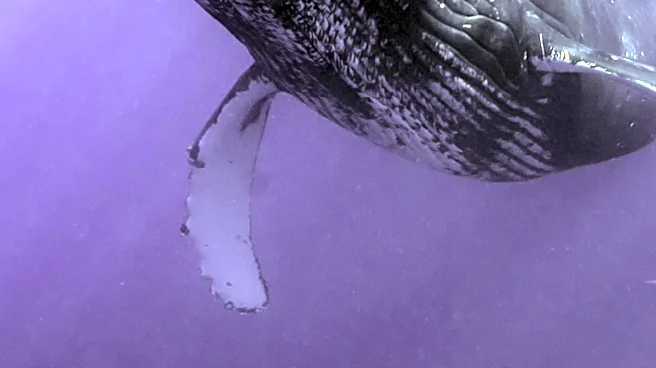
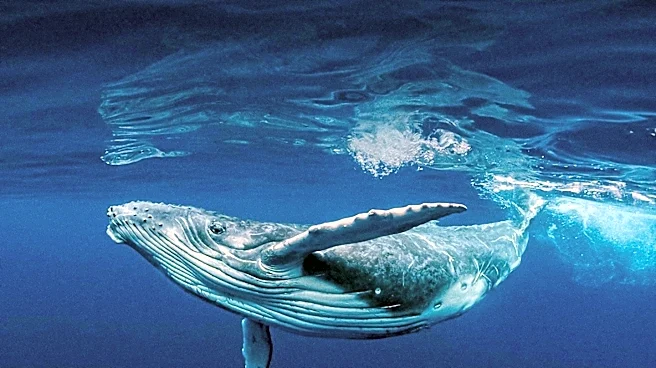
Researchers from the University of Hawaii are employing drones to tag humpback whales, aiming to enhance research while minimizing disturbance to the animals. Traditionally, scientists tagged whales using a long carbon fiber pole from boats, but the new
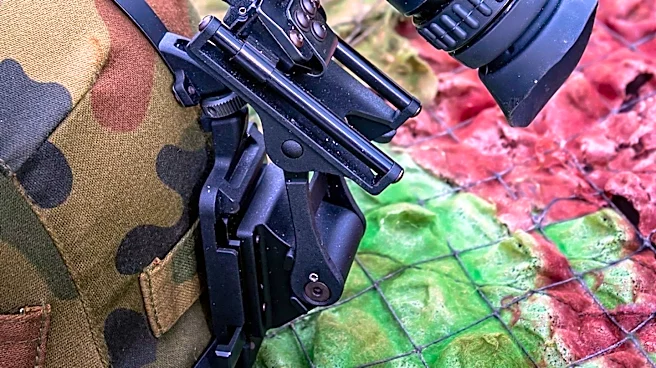
method involves deploying noninvasive suction-cup tags from drones. This approach allows researchers to collect detailed data on whale movement and energy use from a distance, reducing stress on the animals. The fieldwork, conducted off Maui, successfully tagged 22 whales, including lactating females, a calf, and adult males. The project is supported by the Office of Naval Research, the U.S. Navy’s Living Marine Resources program, Dolphin Quest, and private donations.
Why It's Important?
The use of drones in marine research represents a significant advancement in the study of marine mammals, offering a less intrusive method to gather critical data. This technology enables scientists to better understand how whales respond to environmental stressors such as climate events, vessel traffic, and military activity. The insights gained from this research can inform conservation and management strategies, contributing to the protection of these vital marine species. The project also highlights the role of innovative technologies in advancing scientific research and the importance of collaboration between academic institutions and government agencies.