


What's Happening?
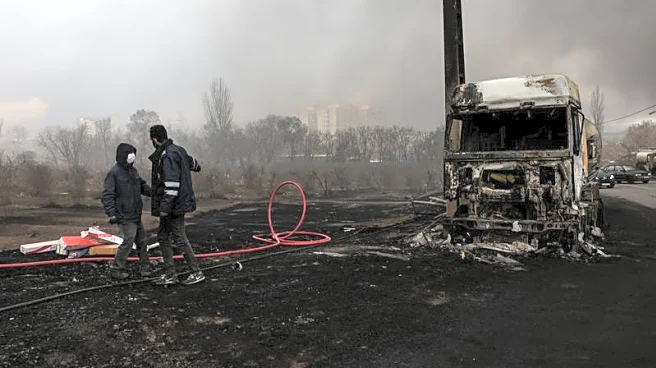
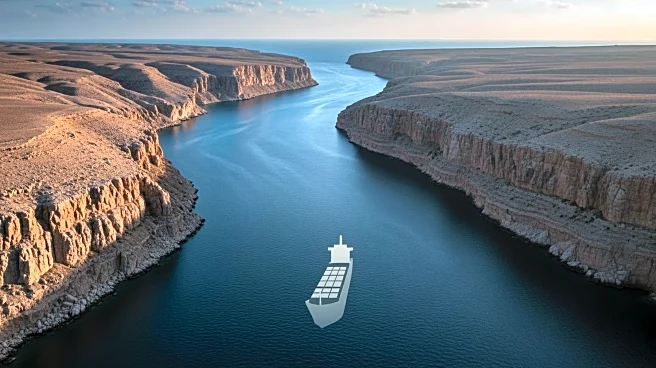
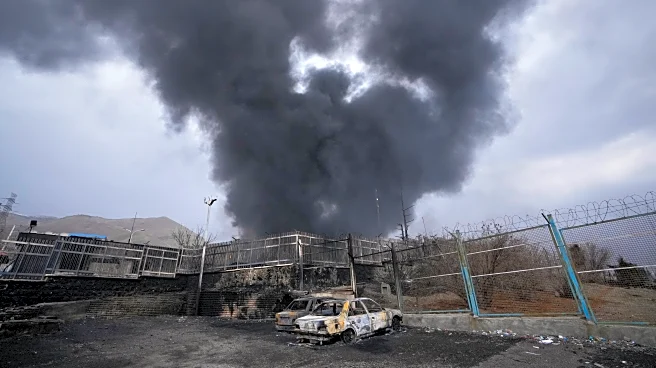
Shipping through the Strait of Hormuz has come to a near standstill for the seventh consecutive day, with only Iran-linked vessels observed transiting the critical waterway. This halt follows multiple attacks on merchant vessels in the region, with ongoing
missile and drone activity posing significant risks to shipping. The disruption has led to storage tanks across the region filling rapidly, and some refineries have begun cutting processing rates. Iraq, Kuwait, and the United Arab Emirates have scaled back production, while Saudi Arabia has increased shipments from Red Sea export terminals to record levels. The situation is further complicated by signal interference and vessels disabling their automatic identification systems, making it difficult to track ship movements.
Why It's Important?
The Strait of Hormuz is one of the world's most important energy chokepoints, and its disruption has significant implications for global oil markets. The halt in shipping affects the supply chain, leading to potential shortages and increased prices. The situation underscores the vulnerability of global energy supplies to geopolitical tensions and the importance of securing critical shipping lanes. The impact on regional production and export logistics highlights the interconnectedness of global energy markets and the potential for widespread economic consequences. The ongoing conflict and its effects on shipping will be closely monitored by international stakeholders, with potential implications for energy policy and market stability.
What's Next?
Efforts to resolve the conflict and restore normal shipping operations in the Strait of Hormuz will be a priority for regional and international stakeholders. Diplomatic and military actions may be necessary to ensure the security of shipping lanes and prevent further disruptions. The situation will require ongoing monitoring and potential adjustments to energy policy to address any further impacts on global markets. The outcome of these efforts will have implications for both regional stability and international energy security.