




What's Happening?
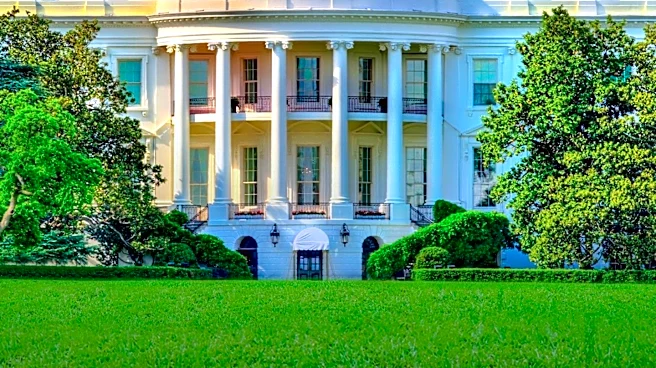
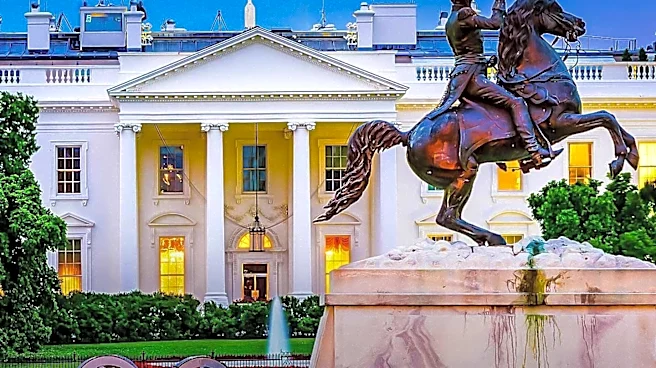
President Donald Trump recently posted an image on Truth Social depicting a large, golden eagle affixed to the Truman Balcony of the White House. The image, which was shared on June 29, 2026, was accompanied by a message from Trump celebrating the White House's
250th anniversary. However, the image's metadata revealed that it was created using Google AI, suggesting it was not a real photograph. The image showed discrepancies, such as differences in the balcony railing and the number of stars on the shield, which traditionally represents the original 13 colonies. A freelance photographer, Andrew Leyden, posted images of the balcony taken after Trump's post, which did not show the eagle. Since returning to office in 2025, Trump has made several personal modifications to the White House, including adding gold accents and overseeing significant construction projects.
Why It's Important?
The use of AI-generated images by a sitting president raises questions about the authenticity and representation of official communications. This incident highlights the growing influence of artificial intelligence in media and politics, potentially affecting public perception and trust. The image's dissemination through official channels like the White House's account on X underscores the importance of verifying the authenticity of visual content shared by public figures. The event also reflects President Trump's continued personalization of the White House, which may influence public and political discourse regarding the use of AI in government communications and the preservation of historical landmarks.
What's Next?
The White House has yet to comment on the AI-generated image, leaving room for speculation about future use of AI in official communications. Stakeholders, including political leaders and media organizations, may call for clearer guidelines on the use of AI-generated content in government communications to ensure transparency and maintain public trust. Additionally, this incident may prompt discussions on the ethical implications of using AI in political messaging and the potential need for regulatory measures to address the authenticity of digital content shared by public officials.