







What's Happening?
The Department of the Interior has finalized the 2027-2028 Operating Guidelines and the Record of Decision for the Post-2026 Colorado River Operations Final Environmental Impact Statement (EIS). Interior Secretary Doug Burgum signed these documents, establishing
a 10-year Decision Framework designed to guide future operational guidelines for Lake Powell and Lake Mead. These decisions aim to ensure reliable operations of the Colorado River system, deliver vital water supplies, and protect critical federal infrastructure. The framework also incorporates flexibility to respond to voluntary actions from Basin states, consensus recommendations, and the ongoing prolonged drought. Secretary Burgum emphasized the critical dependence of 40 million people, millions of acres of farmland, and industries across the American West on the Colorado River. The guidelines include objective criteria for releases from Lake Powell to maintain a minimum elevation of 3,510 feet, reductions in water deliveries to Lower Basin States, and provisions for voluntary conservation efforts.
Why It's Important?
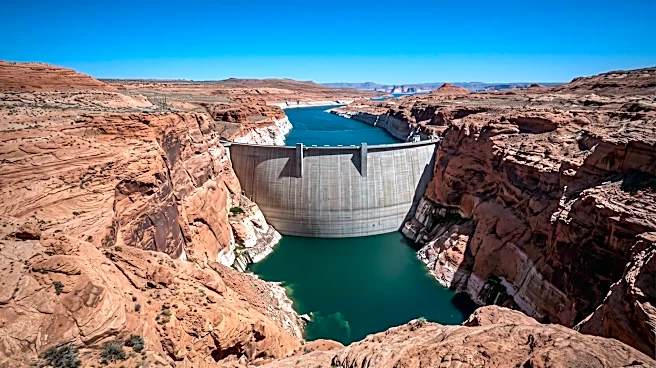
The finalization of the 2027-2028 Colorado River Operating Guidelines is a monumental step in managing one of the most critical water resources in the American West. The Colorado River supplies water to 40 million people across seven states, supports vast agricultural lands, and powers industries. With Lake Powell and Lake Mead reaching historically low levels due to a multidecadal drought, these guidelines are essential for preventing further ecological and economic crises. The framework's emphasis on flexibility, voluntary actions, and consensus among Basin states and tribes is crucial for sustainable water management in a region facing increasing water scarcity. The specified reductions in water deliveries to Lower Basin States, such as Arizona, California, and Nevada, highlight the severe challenges and the necessity for shared sacrifice. The protection of critical infrastructure at Glen Canyon Dam and Hoover Dam is vital for maintaining hydropower generation and water delivery capabilities, impacting energy supply and economic stability across the region.
What's Next?
The newly established 2027-2028 Operating Guidelines will immediately influence water management decisions for Lake Powell and Lake Mead. The August 2026 24-Month Study, released concurrently, determines 2027 operations based on these new guidelines, with Lake Powell expected to begin the water year in the Lower Elevation Infrastructure Protection Range. Water deliveries to Lower Basin States will be reduced by 1.25 million acre-feet for calendar year 2027. The 10-year Decision Framework allows for ongoing negotiations and potential adjustments to the guidelines, with a mechanism for two-year operational periods that can be scaled longer. This flexibility is intended to accommodate evolving Basin circumstances and allow for the incorporation of future consensus agreements among states, tribes, and stakeholders. The Department of the Interior will continue to work with all parties to identify opportunities for infrastructure modernization, conservation programs, and innovative water management approaches to address changing conditions.
Beyond the Headlines
The Colorado River crisis is a stark illustration of the long-term impacts of climate change and population growth on vital natural resources. The new operating guidelines, while critical, represent a complex balancing act between competing demands from urban centers, agriculture, and environmental conservation. The emphasis on voluntary conservation and shared responsibility among Basin states and tribes underscores a shift towards collaborative governance in resource management, moving beyond traditional top-down approaches. This situation also highlights the potential for interstate and inter-tribal conflicts over water rights, which could escalate if drought conditions persist or worsen. The long-term success of these guidelines will depend not only on their technical implementation but also on the political will and sustained cooperation of all stakeholders. The decisions made today will shape the ecological health, economic viability, and social fabric of the American West for generations to come, setting a precedent for how other regions might address similar resource challenges.