

What's Happening?
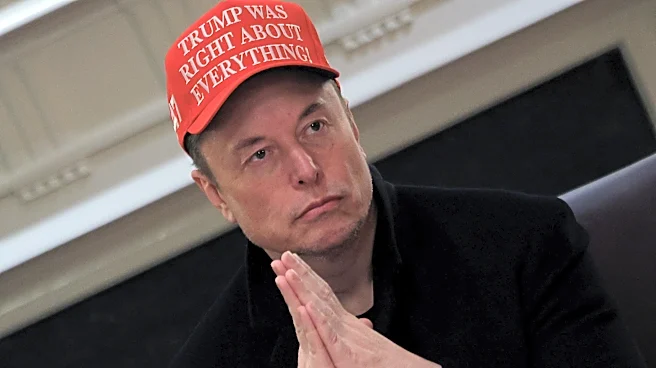
Elon Musk is under investigation by the Wisconsin Elections Commission for allegedly violating state election laws. The commission, which includes both Democratic and Republican members, voted 5-1 to pursue the case, citing probable cause that Musk engaged
in election bribery. The allegations stem from a promotional campaign during the 2025 Wisconsin state Supreme Court race, where Musk offered voters a chance to win $1 million daily. However, it was later revealed in court that the selection process was not random, as initially claimed, but rather involved vetting recipients for political alignment with a specific political action committee's mission. This development is part of a broader pattern of Musk's controversial involvement in political and governmental affairs, including his influence on the Trump administration's policies and his role in the Department of Government Efficiency (DOGE), which faced criticism for its handling of federal grants.
Why It's Important?
The investigation into Musk's actions highlights the ongoing concerns about the influence of wealthy individuals in political processes. If found guilty, Musk's case could set a precedent for how election laws are enforced against high-profile figures. This situation also underscores the broader debate about transparency and accountability in political contributions and campaign financing. Musk's involvement in political activities, including his financial support for Republican candidates, has sparked discussions about the ethical implications of such influence. The outcome of this case could impact future regulations and enforcement of election laws, potentially leading to stricter oversight of campaign contributions and political activities by billionaires.
What's Next?
The Wisconsin Elections Commission's decision to pursue charges against Musk could lead to a legal battle that may involve further investigations and court proceedings. If the case goes to trial, it could attract significant public and media attention, potentially influencing public opinion on the role of money in politics. Additionally, the outcome may prompt legislative efforts to address loopholes in election laws and campaign finance regulations. Political leaders and advocacy groups may use this case to push for reforms aimed at increasing transparency and reducing the influence of wealthy individuals in elections.
Beyond the Headlines
Beyond the immediate legal implications, this case raises questions about the ethical responsibilities of influential figures in shaping public policy and governance. Musk's actions, if proven, could be seen as part of a larger trend of billionaires leveraging their wealth to sway political outcomes, which may erode public trust in democratic institutions. The case also highlights the challenges of regulating political activities in the digital age, where technology and social media can amplify the reach and impact of such campaigns. This situation may lead to broader discussions about the need for updated regulations that address the complexities of modern political engagement.