



What's Happening?
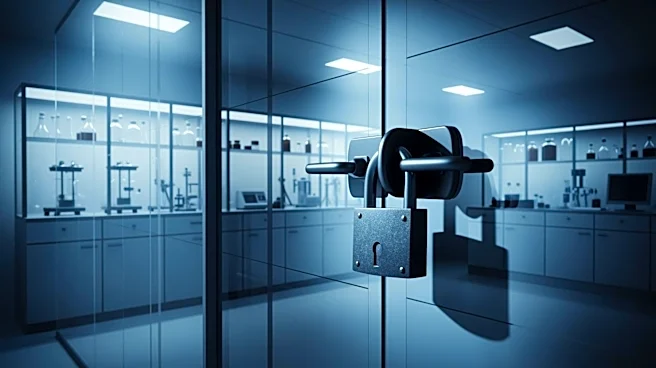
Indiana University Bloomington's biology lab has been locked down following a federal investigation into alleged smuggling of biological samples. The U.S. Department of Agriculture (USDA) and the Federal Bureau of Investigation (FBI) are scrutinizing
the lab of Roger Innes, a plant microbiologist, after a postdoctoral fellow, Youhuang Xiang, was arrested for importing biological samples from China without declaration. The university changed the locks on the biology building, restricting access to researchers, although some access has been restored. The USDA has denied ordering the lockdown, stating that their notice only prohibited moving samples. Innes and his team are preparing for a USDA inspection by labeling all biological samples. The investigation is part of a broader crackdown by the U.S. government on scientists, particularly Chinese nationals, accused of smuggling biological materials.
Why It's Important?
This incident highlights the increasing tension between U.S. authorities and the scientific community, particularly concerning international collaborations and the movement of biological materials. The lockdown and investigation could disrupt ongoing research and affect the careers of scientists involved. It also underscores the U.S. government's heightened scrutiny of foreign researchers, which may deter international scientific collaboration and talent exchange. The situation reflects broader geopolitical tensions and could impact the U.S.'s position as a leader in scientific research by potentially discouraging foreign researchers from working in the country.
What's Next?
The USDA is scheduled to conduct an inspection of the lab on May 19, which could determine the future of the research activities at Indiana University. The outcome of the investigation may influence future policies on the importation of biological materials and the treatment of foreign researchers in the U.S. The scientific community is likely to watch closely, as the case could set precedents for how similar situations are handled in the future. The university and affected researchers may seek legal recourse or policy changes to address the perceived overreach by federal authorities.
Beyond the Headlines
The case raises ethical and legal questions about the balance between national security and academic freedom. It also highlights the potential for racial profiling and discrimination against Chinese researchers, which could have long-term implications for diversity and inclusion in U.S. academia. The situation may prompt discussions on how to better regulate the movement of scientific materials without stifling innovation and collaboration.