





What's Happening?
Inocencio Carbajal, known as El Güero, founded Carnitas Uruapan in Chicago's Pilsen neighborhood in 1975. The taqueria, famous for its traditional carnitas, has expanded over the years, culminating in a flagship location in Little Village for its 50th
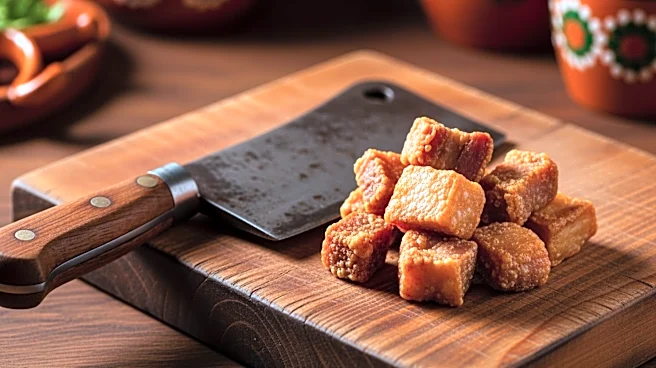
anniversary. Carnitas Uruapan specializes in 'little meats' from every part of the pig, a method that involves flash-frying and slow-cooking to achieve a crispy, tender result. Carbajal, an immigrant from Uruapan, Michoacán, Mexico, brought his family's carnitas recipe to Chicago, where he initially worked in a meatpacking house. His son, Marcos Carbajal, has joined the family business, earning recognition as a James Beard Awards semifinalist for Outstanding Restaurateur.
Why It's Important?
Carnitas Uruapan's success story highlights the impact of immigrant entrepreneurship on local economies and cultural landscapes. By preserving and sharing traditional Mexican culinary practices, the Carbajal family has contributed to Chicago's diverse food scene. The restaurant's growth from a small storefront to a celebrated institution underscores the potential for family-run businesses to thrive and adapt over generations. This narrative also reflects broader themes of resilience and cultural preservation within immigrant communities, offering a model for other aspiring entrepreneurs.
What's Next?
As Carnitas Uruapan continues to celebrate its 50th anniversary, the focus may shift towards further expansion or diversification of its offerings. The involvement of the next generation, represented by Marcos Carbajal, suggests potential innovations while maintaining traditional roots. The restaurant's ongoing success could inspire similar businesses to explore growth opportunities, potentially influencing the culinary landscape in Chicago and beyond.
Beyond the Headlines
The story of Carnitas Uruapan also touches on themes of identity and belonging, as the Carbajal family navigates their dual heritage. The restaurant serves as a cultural bridge, connecting Chicagoans with authentic Mexican cuisine and traditions. This dynamic highlights the role of food in fostering community ties and cultural exchange, offering a deeper understanding of the immigrant experience in America.