
What's Happening?
The Lowy Institute, an Australian policy think tank, has released a report indicating that China might eventually abandon the Gwadar Port, a key component of the China-Pakistan Economic Corridor (CPEC)
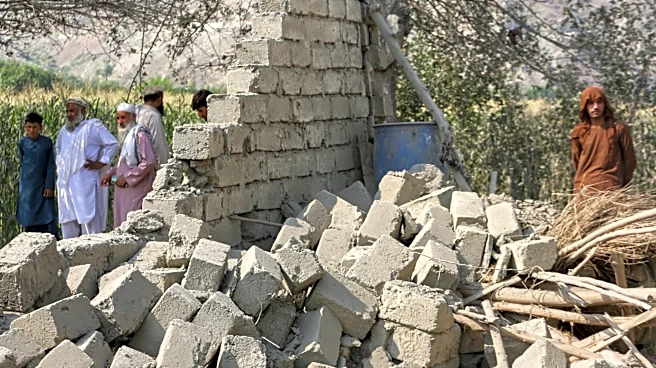
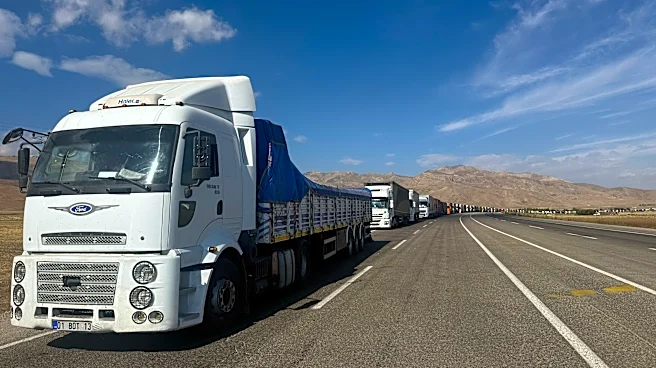
and the Belt and Road Initiative. The report cites significant security risks and economic challenges as primary reasons for this potential retreat. Goods transported from China's Xinjiang region to Gwadar must traverse areas in Pakistan, including Gilgit-Baltistan, Khyber Pakhtunkhwa, and Balochistan, which are plagued by sectarian violence, Taliban activity, and local insurgencies. Additionally, the route involves the Karakoram Highway, a high-altitude stretch over 4,600 meters, prone to landslides, avalanches, and extreme weather, making high-volume container traffic difficult. The Gwadar port, located in Pakistan's Balochistan province, has become a frequent target for insurgent groups like the Baloch Liberation Army (BLA), which perceives CPEC as exploitative. Chinese engineering units, convoys, and infrastructure have been subjected to sophisticated suicide bombings and guerrilla ambushes, leading to increased casualties and forcing Pakistan to establish dedicated Special Security Divisions (SSD) that have struggled to protect Chinese assets.
Why It's Important?
The potential abandonment or significant downscaling of China's involvement in the Gwadar Port has substantial implications for regional geopolitics and global trade. The port was envisioned as a crucial maritime shortcut for China, aiming to bypass the strategically vulnerable Malacca Strait. A retreat would signify a major setback for China's Belt and Road Initiative, highlighting the difficulties and costs associated with its ambitious infrastructure projects in unstable regions. For Pakistan, the failure of Gwadar Port to become a vibrant commercial hub would mean a loss of anticipated economic benefits and further strain on its security resources, which are already stretched thin by internal conflicts. The report suggests that China is growing weary of sacrificing capital and lives for a commercially struggling venture, indicating a potential shift in its foreign investment strategies, prioritizing stability and profitability over strategic positioning in high-risk areas. This development could also influence other nations considering participation in China's Belt and Road projects, prompting a reevaluation of the security and economic viability of such partnerships.
What's Next?
The Lowy Institute report forecasts that China will likely make a quiet retreat from Gwadar Port by reducing its operational footprint. This could transform Gwadar from a projected commercial mega-port into a smaller, heavily fortified naval refueling station. Another possibility is that China might restructure the lease entirely to mitigate its losses. This shift would necessitate a re-evaluation of China's broader strategic objectives in the Indian Ocean region and its approach to infrastructure development in politically volatile areas. Pakistan will likely face increased pressure to address the persistent security threats in Balochistan and other regions to attract and retain foreign investment. The international community, particularly countries with strategic interests in the region, will be closely observing these developments, as they could signal a change in the dynamics of China's global influence and its willingness to sustain projects facing significant resistance and economic hurdles.
Beyond the Headlines
The challenges at Gwadar Port underscore a deeper tension inherent in China's Belt and Road Initiative: the conflict between ambitious geopolitical and economic goals and the realities of local instability and resistance. The BLA's targeting of Chinese interests reflects a broader sentiment among some local populations who view these projects as exploitative rather than beneficial, leading to increased resentment and violence. This situation highlights the ethical and cultural dimensions of large-scale foreign investment, where a lack of genuine local engagement and benefit-sharing can fuel insurgencies. The report's findings suggest that even with significant financial and strategic investment, projects can falter if they do not adequately address the socio-political landscape and security concerns of the host nation. This could lead to a re-evaluation of the 'win-win' narrative often associated with the Belt and Road Initiative, revealing the complex and often costly trade-offs involved in expanding global influence through infrastructure development.