
What's Happening?
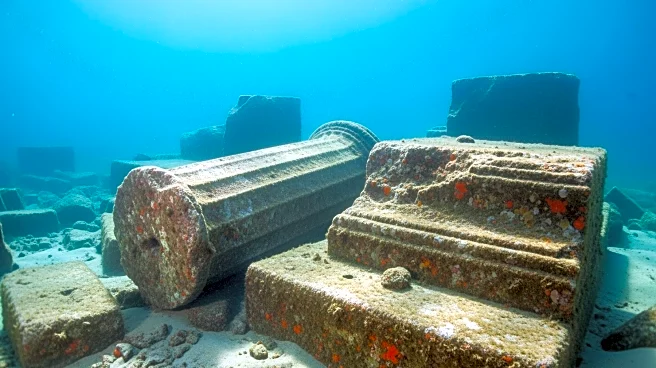
Archaeologists have uncovered the remains of the Lighthouse of Alexandria, one of the seven wonders of the ancient world, off the coast of Egypt. The discovery includes 22 monumental stone blocks that
were part of the lighthouse's entrance, submerged for over 600 years. These findings are part of the international PHAROS Project, which aims to digitally reconstruct the lighthouse using advanced imaging technologies. The lighthouse, built in the 3rd century BCE, was a marvel of engineering and guided sailors for over a millennium before being destroyed by earthquakes.
Why It's Important?
The discovery of the Lighthouse of Alexandria's remains is a significant archaeological achievement, offering insights into ancient engineering and architectural techniques. It highlights the enduring fascination with the seven wonders of the ancient world and the ongoing efforts to preserve and understand historical heritage. The project to digitally reconstruct the lighthouse could enhance cultural tourism and education, providing a virtual glimpse into the past. This discovery also underscores the importance of international collaboration in preserving and studying historical sites.
What's Next?
The PHAROS Project will continue to digitally map and reconstruct the Lighthouse of Alexandria, with the goal of creating a detailed virtual model. This effort may lead to increased interest in similar projects for other ancient wonders. The findings could also inspire further archaeological exploration in the region, potentially uncovering more artifacts and contributing to our understanding of ancient civilizations. The digital reconstruction may be used in educational programs and virtual reality experiences, bringing history to life for a global audience.