






What's Happening?
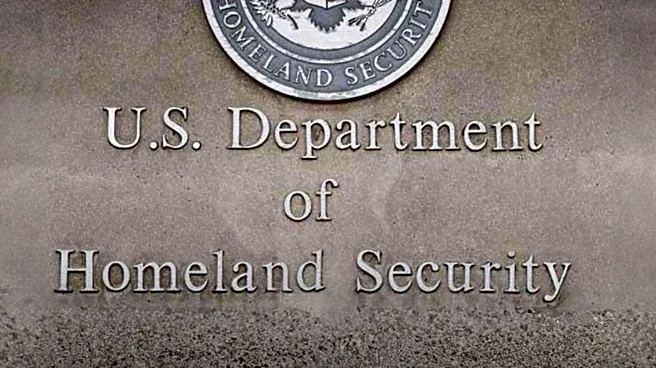
The U.S. Department of Homeland Security (DHS) is actively addressing a range of national security concerns, including recent widespread outages affecting Microsoft, the Federal Aviation Administration (FAA), and banking systems, alongside ongoing cyber
threats and geopolitical tensions. According to Steve MacMartin, a former Homeland Security special agent and current cybersecurity professor at Hilbert College, while some threats like 'dirty bomb' warnings may be overblown, the disruptions to critical infrastructure, such as banking and air travel, are significant and potentially cyber-related. MacMartin emphasizes that the U.S. has been in a 'cyber war' for nearly two decades, with foreign adversaries consistently attempting cyberattacks. He notes that DHS, in coordination with the FBI and the Cybersecurity and Infrastructure Security Agency (CISA), continuously investigates and defends against these evolving threats. Additionally, MacMartin points out that political transitions, such as changes in congressional control, often lead to shifts in the department's enforcement priorities, citing immigration policy as a prime example where upper management sets the focus.
Why It's Important?
The department's focus on cyber threats to critical infrastructure is crucial for national security and economic stability. Disruptions to systems like air travel, banking, and major tech services can have cascading effects, impacting millions of Americans, causing significant economic losses, and eroding public trust. The ongoing 'cyber war' signifies a persistent, non-conventional threat that requires continuous adaptation and robust defense mechanisms. The coordination between DHS, FBI, and CISA is vital for a unified national response to sophisticated cyberattacks. Furthermore, the influence of political changes on DHS priorities highlights the dynamic nature of homeland security policy. Shifts in enforcement focus, such as on immigration, can have profound societal impacts, affecting communities, legal processes, and resource allocation within the department. Understanding these dynamics is essential for assessing the effectiveness and direction of national security efforts.
What's Next?
In response to the persistent and evolving cyber threats, DHS will likely continue to enhance its cybersecurity defenses and intelligence-sharing capabilities with partner agencies like the FBI and CISA. There will be an ongoing effort to investigate the root causes of recent outages and fortify critical infrastructure against future attacks. As political landscapes shift, particularly with changes in congressional control, the department may adjust its operational focus and resource allocation. This could lead to renewed emphasis on certain areas, such as specific types of immigration enforcement or particular counter-terrorism initiatives, based on the priorities of the incoming administration or legislative body. The department will also continue to monitor geopolitical developments, such as threats from nations like Iran, and adapt its intelligence and response strategies accordingly, even if some perceived threats are deemed less immediate.
Beyond the Headlines
The continuous evolution of cyber threats underscores a fundamental shift in national security paradigms, moving beyond traditional military conflicts to a persistent, borderless digital battlefield. This 'cyber war' challenges conventional notions of defense and sovereignty, as attacks can originate from anywhere and impact critical functions without direct physical confrontation. The economic implications are vast, with potential for billions in losses from productivity disruptions and data breaches, highlighting the need for robust public-private partnerships in cybersecurity. Ethically, the balance between national security surveillance and individual privacy becomes increasingly complex in the digital realm. The political influence on DHS priorities also raises questions about the long-term consistency and strategic direction of homeland security efforts, as policy shifts can create instability and uncertainty for both the public and departmental personnel. This dynamic environment necessitates a flexible yet resilient national security framework.