
What's Happening?
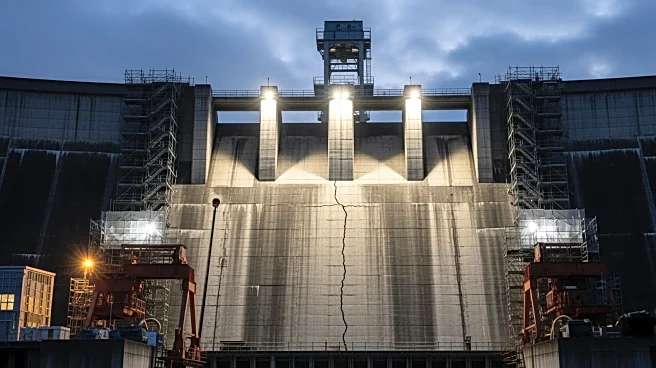
The Senteeko Dam in Mpumalanga is facing significant safety risks due to its compromised structural integrity, exacerbated by recent heavy rains. The Department of Water and Sanitation (DWS) has mandated
the Shamile Communal Property Association (CPA), the dam's owner, to take immediate action to stabilize the dam. The DWS's directive follows technical assessments indicating that the dam remains in a partially failed state, posing a threat to downstream communities. The department has instructed the Shamile CPA to engage a professional engineer to devise and implement remedial measures within seven days. These measures are crucial to prevent further deterioration and potential failure of the dam structure. The appointed engineer must oversee the repair work to ensure compliance with safety standards, with the DWS warning of legal consequences for non-compliance.
Why It's Important?
The situation at Senteeko Dam highlights the critical need for infrastructure maintenance and safety in regions prone to heavy rainfall. The potential failure of the dam poses a significant risk to lives, property, and livelihoods downstream, underscoring the importance of timely intervention. The DWS's involvement reflects the government's responsibility to safeguard public safety and prevent environmental disasters. This incident also raises broader concerns about the state of infrastructure in similar regions, where aging or poorly maintained structures could lead to catastrophic outcomes. The enforcement of safety measures at Senteeko Dam serves as a reminder of the ongoing challenges in managing water resources and infrastructure resilience in the face of climate variability.
What's Next?
The immediate focus will be on the Shamile CPA's compliance with the DWS's orders to stabilize the dam. The professional engineer's assessment and subsequent repair work will be critical in mitigating the risks associated with the dam's compromised state. The DWS will likely monitor the situation closely to ensure that the necessary safety measures are implemented effectively. This case may prompt a broader review of dam safety protocols and infrastructure management practices across the region, potentially leading to policy changes or increased funding for maintenance and repair projects. Stakeholders, including local communities and environmental groups, may advocate for more stringent oversight and accountability in managing water infrastructure.