



What's Happening?
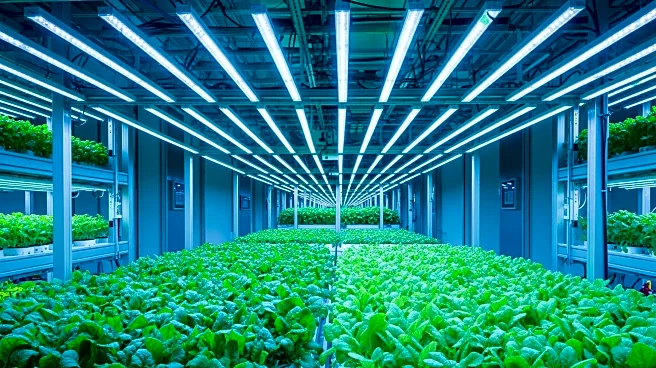
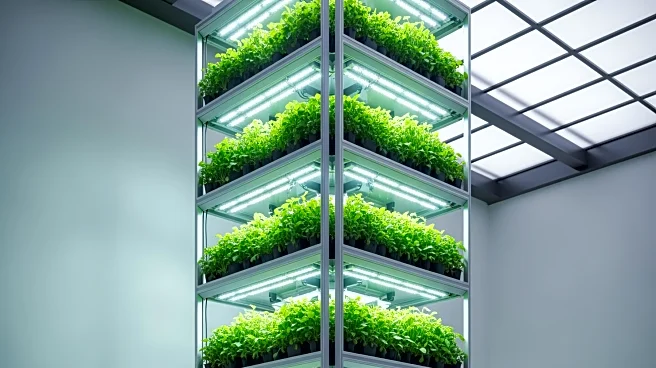
The indoor farming market in Europe is projected to grow significantly, reaching USD 16.9 billion by 2032, driven by the increasing demand for sustainable agriculture. The market is supported by the adoption of controlled environment agriculture technologies
and investments in advanced greenhouse infrastructure. The Netherlands leads the market with a 25.8% share, thanks to its strong agri-tech innovation and greenhouse technology ecosystem. Greenhouses account for 70% of the market, while hydroponics holds 60% of the market share, reflecting the shift towards soil-free cultivation methods. The emphasis on sustainable food production and resource efficiency is propelling the market's expansion.
Why It's Important?
The growth of the indoor farming market in Europe highlights a significant shift towards sustainable agriculture, which could have implications for the U.S. as well. As climate change and resource limitations challenge traditional farming, indoor farming offers a viable solution by optimizing resource utilization and improving crop productivity. The U.S. could benefit from adopting similar technologies to enhance food security and reduce environmental impact. The advancements in controlled environment agriculture could also lead to increased collaboration and technology exchange between Europe and the U.S., fostering innovation in sustainable farming practices.
What's Next?
As the indoor farming market continues to expand, further investments in technology and infrastructure are expected. The focus will likely be on enhancing energy efficiency and reducing operational costs to make indoor farming more accessible and sustainable. The U.S. may look to Europe as a model for integrating advanced farming technologies and developing policies that support sustainable agriculture. Continued research and development in this field could lead to breakthroughs that further improve crop yields and resource efficiency, benefiting both European and U.S. agricultural sectors.