



What's Happening?
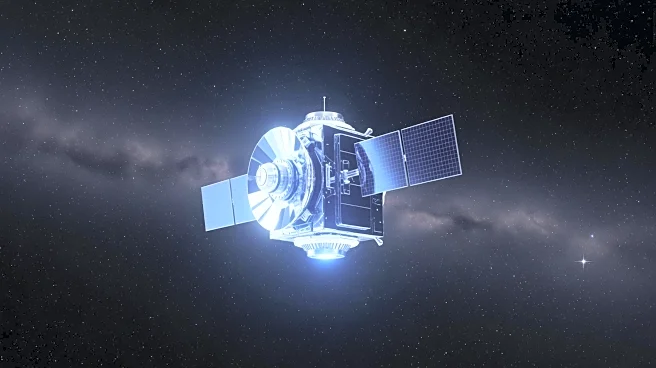
The IOD-2 satellite, built by Thales Alenia Space, has been successfully launched as part of the European Space Agency's Celeste mission. The satellite was launched from New Zealand atop a Rocket Lab Electron rocket. IOD-2 is a CubeSat designed to validate
system definitions and enable early signal transmission for future Celeste satellites. This launch marks a significant milestone in Europe's next-generation satellite navigation system, which aims to deliver enhanced positioning accuracy and integrity. The Celeste mission will demonstrate how a multi-orbit architecture can improve navigation services, providing centimeter-level positioning accuracy and resistance to jamming.
Why It's Important?
The successful launch of the IOD-2 satellite is a crucial step in advancing satellite navigation technology. By enhancing positioning accuracy and integrity, the Celeste mission can improve various applications, including autonomous vehicles, IoT, and unmanned systems. This development is significant for Europe as it strengthens its position in the global satellite navigation market, potentially leading to new export opportunities. The mission's focus on robustness and low latency is essential for applications in challenging environments, such as urban areas and polar regions. This could lead to improved navigation services and synchronization of telecommunications networks, benefiting industries and consumers alike.