


What's Happening?
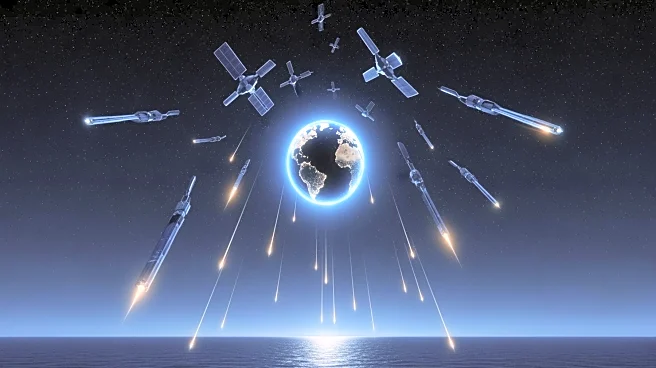
SpaceX's Starlink satellites are increasingly becoming a concern due to their reentry into Earth's atmosphere, which poses both environmental and safety risks. The older versions of these satellites, weighing 700 kilograms, have been reported to survive
reentry and fall to Earth, with incidents documented in Canada, Poland, Kenya, and the United States. The newer generation of Starlink satellites, which are significantly heavier at approximately 2 metric tons, raises questions about their ability to completely disintegrate upon reentry. This issue is compounded by the fact that the cumulative risk of injury from falling debris is not adequately addressed by current regulations, which were designed for a time when satellite reentries were rare. Additionally, the reentry of these satellites releases aluminum oxide nanoparticles into the atmosphere, which can catalyze reactions that deplete the ozone layer.
Why It's Important?
The increasing number of Starlink satellites and their potential to survive reentry pose significant risks to both public safety and the environment. The release of aluminum oxide nanoparticles into the atmosphere could have long-term detrimental effects on the ozone layer, which is crucial for protecting life on Earth from harmful ultraviolet radiation. The current regulatory framework does not account for the cumulative risk posed by the large number of satellites, which could lead to a higher probability of debris causing injury or damage on the ground. This situation highlights the need for updated regulations that consider the collective impact of satellite constellations and ensure the safety and sustainability of space activities.
What's Next?
As the number of satellites in orbit continues to grow, there is a pressing need for regulatory bodies to update safety standards and address the cumulative risks associated with satellite reentries. This may involve setting stricter standards for satellite design to ensure complete disintegration upon reentry and implementing measures to mitigate the environmental impact of released particles. Additionally, international cooperation may be necessary to develop a comprehensive framework that addresses the global nature of space activities and their potential consequences.