




What's Happening?
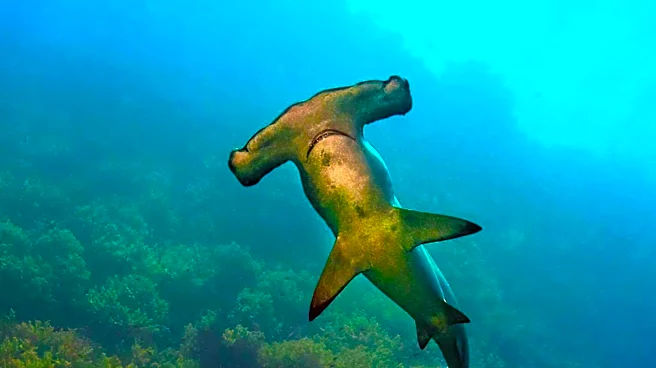
Eight of the nine hammerhead shark species listed on the IUCN Red List are threatened with extinction, with six classified as Critically Endangered. Scalloped and great hammerheads are estimated to have declined by over 80% in three generations. The primary
cause of this decline is fishing, both for their valuable fins and as bycatch. Hammerheads are particularly vulnerable to capture stress compared to other shark species. For instance, in the U.S. Atlantic pelagic longline fishery, only 45.9% of scalloped hammerheads survived when the line was retrieved between 1995 and 2012. Additionally, at-vessel mortality for great hammerheads on U.S. shark bottom longlines is reported at 56%, and 71% for smooth hammerheads on Portuguese longlines. Climate change also poses a threat, as warmer waters appear to displace scalloped hammerheads from their usual habitats, as observed at Cocos Island where predicted counts fell by 10.3% for every 1°C rise in sea surface temperature.
Why It's Important?
The severe decline in hammerhead shark populations has significant ecological implications for marine ecosystems, as these sharks are apex predators that play a crucial role in maintaining the health and balance of ocean food webs. Their disappearance could lead to trophic cascades, impacting other marine species and the overall biodiversity of the oceans. Economically, the demand for shark fins, particularly in the Hong Kong trade where hammerhead fins are highly valued, drives illegal and unsustainable fishing practices. This not only threatens shark populations but also undermines the efforts of regulated fisheries and conservation initiatives. The vulnerability of hammerheads to bycatch in U.S. Atlantic fisheries highlights the need for improved fishing practices and regulations to protect non-target species, which can have broader impacts on the sustainability of U.S. fishing industries and marine resource management.
What's Next?
Conservation efforts are focusing on implementing and enforcing stricter fishing quotas and trade regulations. The Northwest Atlantic has shown that hammerhead populations can recover under strictly enforced U.S. quotas, indicating that reducing fishing mortality is a key step. Measures such as prohibiting the retention of great hammerheads in U.S. waters could protect over 90% of their core habitat. Additionally, expanding marine protected areas and implementing dynamic protection strategies, such as enlarging reserves during El Niño years when sharks travel further, are being considered. International agreements like CITES and the Convention on Migratory Species aim to regulate trade and protect these species, but their effectiveness depends on national implementation and enforcement. Continued research and tracking of hammerhead movements will be crucial to inform effective conservation strategies and adapt to the impacts of climate change on their habitats.
Beyond the Headlines
The plight of hammerhead sharks underscores a broader ethical and environmental challenge concerning human impact on marine life and ecosystems. The high value placed on shark fins in certain markets drives a global trade that often bypasses regulations, highlighting issues of international wildlife trafficking and the need for stronger global governance. The biological characteristics of hammerheads, such as their slow reproduction rates and schooling behavior, which once served as evolutionary advantages, have become liabilities in the face of modern industrial fishing, illustrating an 'evolutionary trap.' This situation calls for a re-evaluation of fishing technologies and practices to minimize bycatch and stress on vulnerable species. Furthermore, the observed displacement of hammerheads due to warming waters serves as a stark indicator of climate change's direct impact on marine biodiversity, necessitating integrated conservation strategies that address both direct human exploitation and climate-induced habitat alterations.