





What's Happening?
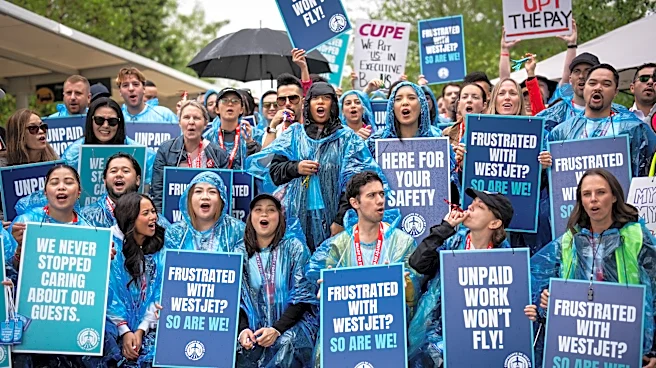
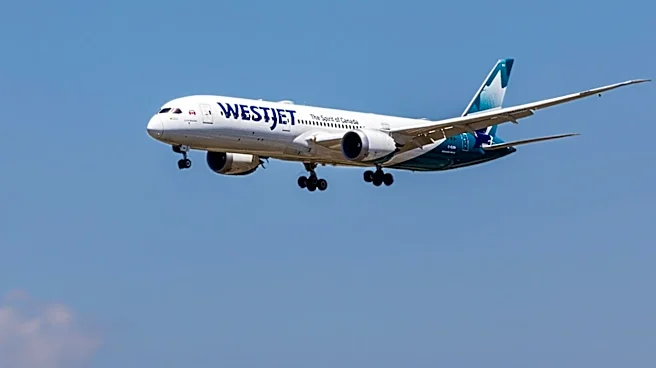
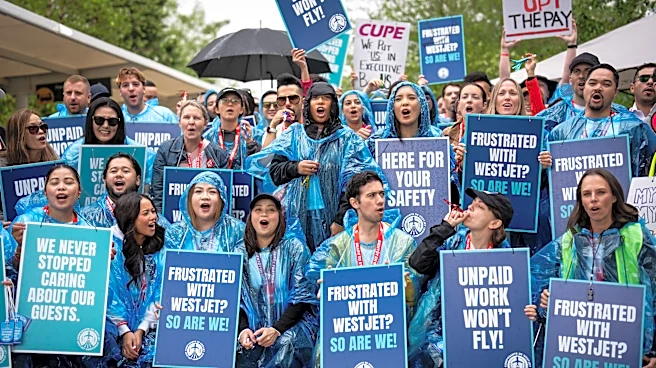
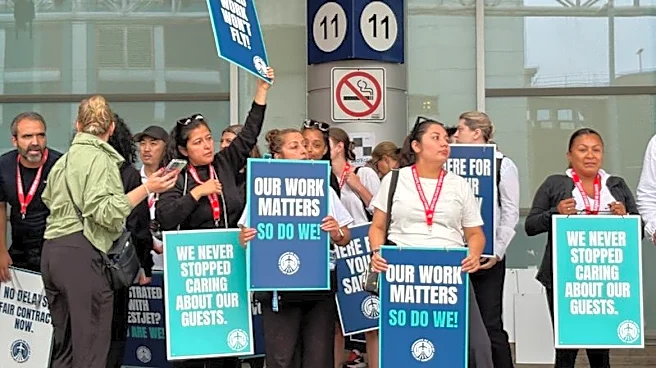
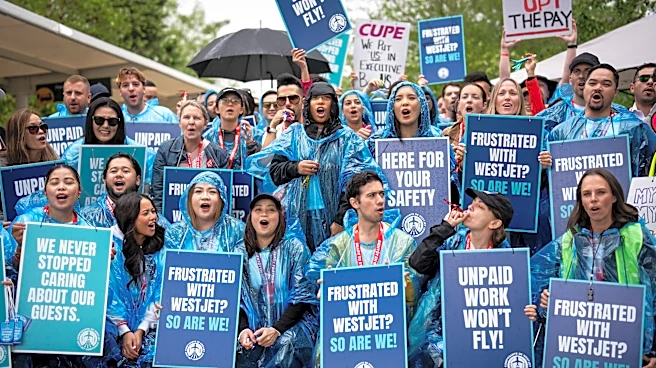
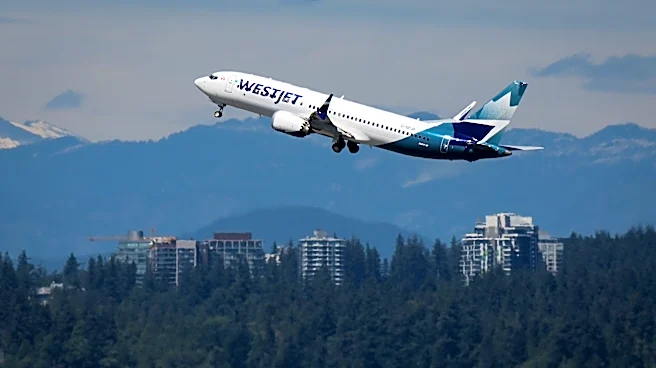
WestJet and the Canadian Union of Public Employees (CUPE) have reached a tentative agreement to end a strike by flight attendants that resulted in the cancellation of hundreds of flights. The strike, which began over the weekend, affected approximately
225,000 Canadians during one of the busiest travel periods of the summer. The core issue in the dispute was the compensation for flight attendants, with the union demanding pay for all duties performed, not just for time when the aircraft is in motion. The tentative deal, which will be presented to cabin crew for a ratification vote, includes a duty period premium and increased compensation. The federal government has welcomed the resolution, and flights are expected to resume gradually over the coming days.
Why It's Important?
The resolution of the strike is significant as it alleviates the travel disruptions experienced by thousands of passengers during a peak travel period. The agreement addresses long-standing concerns over fair compensation for flight attendants, potentially setting a precedent for labor negotiations in the airline industry. The strike highlighted the vulnerability of the travel sector to labor disputes, emphasizing the need for effective negotiation strategies to prevent future disruptions. The outcome may influence labor relations and compensation structures in other airlines, impacting the broader aviation industry in Canada and potentially beyond.
What's Next?
The tentative agreement will be subject to a ratification vote by the cabin crew. If approved, it will officially end the strike and allow WestJet to resume normal operations. The airline will need to manage the backlog of affected flights and passengers, ensuring a smooth transition back to regular service. Stakeholders, including passengers and travel agencies, will be closely monitoring the situation to assess the impact on future travel plans. The resolution may also prompt other airlines to review their labor agreements to avoid similar disruptions.