








What's Happening?
New research from epidemiologists at USC and UC Irvine reveals that dust pollution from the shrinking Salton Sea is adversely affecting the lung growth of children in the Imperial Valley. The study, which began in 2017, followed over 700 elementary-school-age
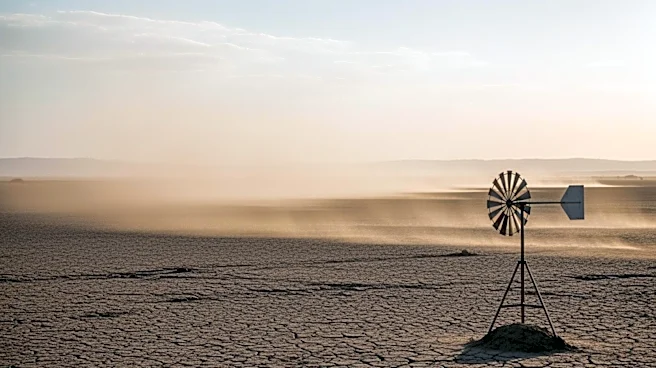
children, documenting respiratory health symptoms and lung function. The findings indicate that children living closer to the Salton Sea experience greater health impacts than those in urban areas near busy roadways. The Salton Sea, once a resort destination, is now a source of toxic dust due to agricultural runoff and diminishing water sources, exacerbated by water use agreements and proposed industrial activities.
Why It's Important?
The health of children in the Imperial Valley is at risk due to increased air pollution from the Salton Sea. This situation underscores the need for urgent policy interventions to manage environmental health risks. The predominantly low-income Latino communities in the region have long been overlooked in policy discussions, despite facing significant health challenges. The study's findings highlight the importance of considering public health impacts in water and industrial policy decisions, particularly as the region faces potential increases in dust pollution from proposed lithium extraction projects.
What's Next?
Community organizations and local residents are advocating for projects to reduce dust pollution and improve healthcare access. The study's findings are expected to inform future policy decisions regarding water management and industrial activities near the Salton Sea. As the public and private sectors plan for future developments, there is a growing call to prioritize the health of local children and address the environmental crisis in the region.