





What's Happening?
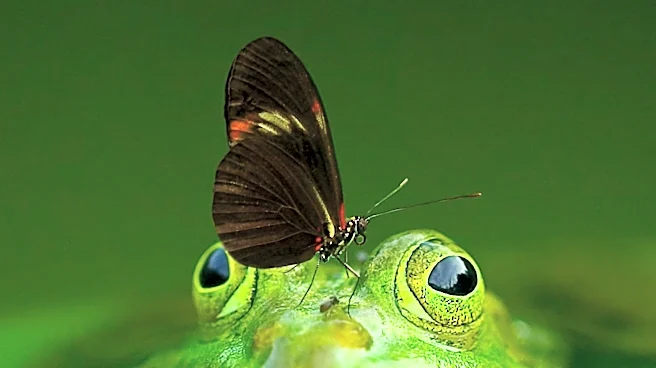
Researchers have discovered that the American bullfrog may hold the key to an antidote for paralytic shellfish poisoning caused by saxitoxin. A protein produced by the bullfrog, known as saxiphilin, has shown promise in neutralizing the toxin in laboratory
tests on mice. The study, published in Nature Communications, suggests that saxiphilin acts as a toxin-binding sponge, preventing saxitoxin from affecting nerve cells. This discovery could lead to the development of a treatment for shellfish poisoning, which currently relies on supportive care.
Why It's Important?
The potential use of saxiphilin as an antidote for shellfish poisoning represents a significant advancement in public health. Saxitoxin is a potent neurotoxin that poses a risk to seafood consumers, and an effective treatment could reduce the incidence of poisoning and its associated health impacts. The research highlights the importance of exploring natural resistance mechanisms in animals, which could lead to new medical treatments. If successful, this antidote could improve food safety and protect public health, particularly in regions prone to harmful algal blooms.
What's Next?
Further research is needed to determine the safety and efficacy of saxiphilin in humans. Clinical trials will be necessary to assess its potential as a treatment for shellfish poisoning. Additionally, researchers aim to develop a quick and inexpensive test for detecting saxitoxin in seafood, enhancing food safety measures. The study also opens avenues for exploring other natural resistance mechanisms in animals, which could lead to new treatments for various toxins.