






What's Happening?
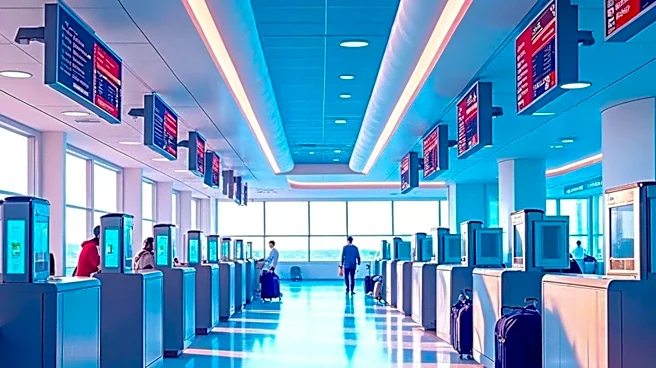
Cairo International Airport in Egypt has launched free interactive photo kiosks that utilize artificial intelligence to generate personalized souvenir images for travelers. This initiative, announced by the Cairo Airport Company on November 8, 2026, is part
of a broader effort to improve the passenger experience through digital technology. The kiosks allow travelers to select various historical periods and create photographs depicting themselves in styles associated with those eras. Passengers have the option to save their AI-generated images or share them on social media. This development is integrated into a larger modernization program led by Egypt's Ministry of Civil Aviation and the Egyptian Holding Company for Airports and Air Navigation. Airport officials stated that the technology aims to provide entertainment alongside traditional airport services, making travel more memorable for passengers.
Why It's Important?
While this specific development is located in Egypt, the introduction of AI-powered interactive kiosks at a major international airport highlights a growing global trend in leveraging advanced technology to enhance customer experience in travel hubs. For U.S. airports and the travel industry, this could signal future directions in passenger engagement and service offerings. The success of such initiatives abroad might influence U.S. airport authorities and airlines to explore similar AI-driven entertainment and personalized services, potentially leading to increased investment in digital infrastructure and passenger-centric technologies. This trend could also create new opportunities for U.S. technology companies specializing in AI, interactive displays, and digital content creation, as airports worldwide seek to modernize and differentiate their services. The focus on 'memorable travel' experiences could shift competitive strategies within the global aviation sector, impacting how U.S. carriers and airports attract and retain passengers.
What's Next?
The implementation of AI-powered photo kiosks at Cairo International Airport is part of a larger modernization plan that includes other technological upgrades, such as the Ask Mariam digital assistant and enhanced baggage screening systems. Future plans for the airport involve the construction of a fourth terminal, designed to significantly increase its annual passenger capacity to approximately 70 million. The success and passenger reception of these AI kiosks in Cairo could serve as a case study for other international airports, including those in the U.S., contemplating similar technological integrations. If these kiosks prove popular and effective in enhancing passenger satisfaction, it is likely that more airports globally will explore adopting comparable AI-driven entertainment and service solutions in the coming years, potentially leading to a new standard for passenger engagement in the aviation industry.
Beyond the Headlines
The deployment of AI-powered photo kiosks at Cairo International Airport touches upon several deeper implications beyond immediate passenger entertainment. It reflects a broader societal embrace of artificial intelligence in public spaces, blurring the lines between utility and leisure. Ethically, the use of AI for personalized image generation raises questions about data privacy and the potential for misuse of biometric data, even if the current application is for entertainment. Culturally, these kiosks offer a novel way for travelers to interact with and commemorate their travel experiences, potentially influencing how people perceive and engage with airport environments. This trend could also signify a long-term shift in airport design and functionality, moving beyond mere transit points to become more immersive and experiential destinations, driven by technological innovation and a desire to cater to the evolving expectations of modern travelers.