







What's Happening?
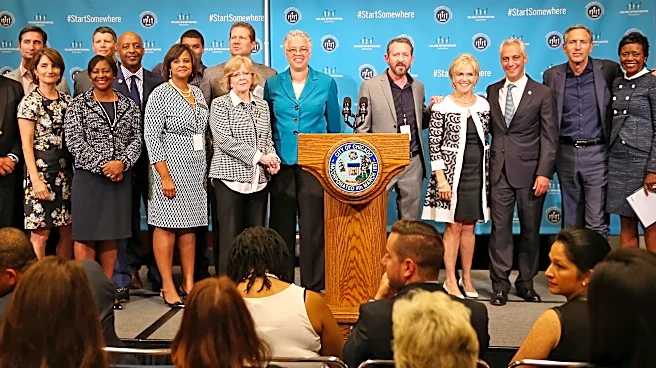
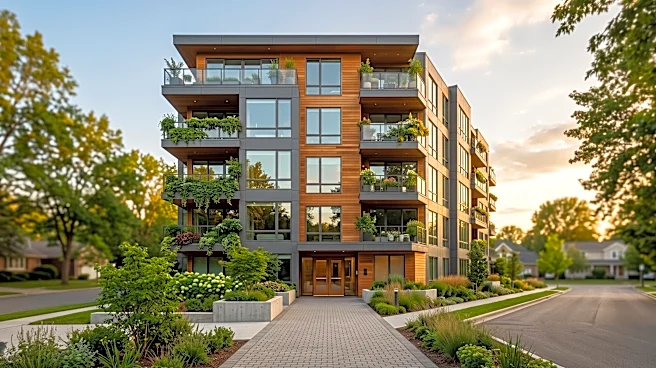
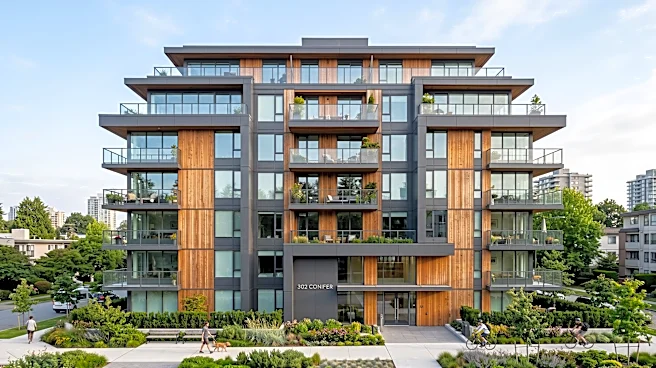
Fort Collins, Colorado, celebrated the grand opening of 302 Conifer, one of the state's first Proposition 123 Equity projects. This 76-unit development is designed to provide affordable housing for middle-class renters, specifically those with incomes
between 60% and 100% of the area median income in Northern Colorado. Governor Jared Polis highlighted the project as an investment in Colorado's growth and economy, emphasizing its role in attracting businesses and offering residents more choices for living closer to jobs, transit, and schools. The project addresses the 'Missing Middle' demographic, whose incomes are often too high for traditional low-income housing but insufficient to avoid being 'rent-burdened' by market rates. Residents will also participate in Colorado Renter Rewards, a program designed to help them accumulate savings through on-time rent payments and share in the property's equity.
Why It's Important?
The 302 Conifer project is a significant development in addressing the housing affordability crisis impacting middle-income earners across the U.S., particularly in rapidly growing regions like Colorado's Front Range. By targeting the 'Missing Middle,' this initiative provides a model for how states and local communities can create housing solutions for a demographic often overlooked by existing affordable housing programs. The integration of the Colorado Renter Rewards program is particularly innovative, offering residents a unique opportunity to build savings and equity while renting, which could help bridge the gap to homeownership. This approach could influence other states and cities grappling with similar housing challenges, demonstrating a new pathway to financial stability for renters and fostering more inclusive economic growth by retaining a diverse workforce.
What's Next?
The success of 302 Conifer will likely be closely monitored as a case study for future Proposition 123 Equity projects and similar initiatives nationwide. If successful, the model, particularly the Colorado Renter Rewards program, could be replicated in other communities facing housing affordability issues. The project's impact on the local economy, including its ability to attract and retain businesses by providing housing for their workforce, will be a key metric. Future developments may explore expanding the scope of such projects to other income brackets or integrating additional community benefits. The ongoing evaluation of resident satisfaction, financial outcomes from the Renter Rewards program, and the overall sustainability of the project will inform policy decisions and investment strategies for affordable housing in Colorado and beyond.
Beyond the Headlines
This project represents a deeper shift in how housing affordability is being conceptualized and addressed. It moves beyond traditional low-income housing models to acknowledge the economic pressures faced by a broader segment of the population. The 'tenant equity vehicle' aspect of Colorado Renter Rewards challenges conventional landlord-tenant relationships by allowing renters to accrue financial benefits, potentially fostering a greater sense of ownership and community stability. This innovative approach could spark a national conversation about alternative housing finance mechanisms and wealth-building opportunities for renters. Furthermore, the project's focus on sustainable design, with all-electric heating/cooling and solar panels, aligns with broader environmental goals, demonstrating how affordable housing initiatives can also contribute to climate resilience and energy efficiency.