





What's Happening?
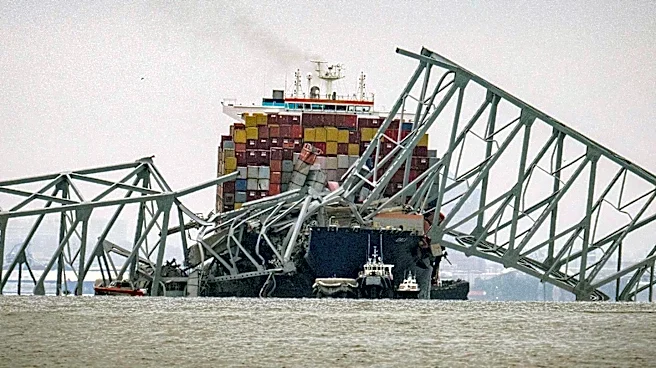
A bridge under construction in Old Town, Maine, the Llewellyn Estes Bridge on Stillwater Avenue, collapsed on Thursday afternoon, resulting in one injury. Milford Fire/Rescue crews responded to the incident shortly before 2 p.m. Initial reports suggested
multiple possible injuries, prompting a call for assistance from several neighboring agencies. However, it was quickly confirmed that only one person was injured. The injured individual was extricated by the combined efforts of multiple fire departments and transported to a hospital. The Maine Department of Transportation (MDOT) reported that the collapse occurred while construction crews were pouring concrete for the bridge deck. The bridge was closed to traffic as part of the ongoing construction work, ensuring that motorists were not impacted by the collapse. MDOT is currently assessing the situation to determine the cause and extent of the incident.
Why It's Important?
This incident underscores critical issues in infrastructure development and worker safety within the U.S. construction industry. The collapse of a bridge during construction, even without public traffic, highlights the inherent risks involved in large-scale engineering projects and the paramount importance of stringent safety protocols and quality control. For the construction sector, such events can lead to increased scrutiny, potential delays in project timelines, and heightened insurance costs. It also raises questions about the structural integrity of ongoing projects and the oversight mechanisms in place. For the local community, while traffic was not directly impacted, the incident can cause public concern regarding the safety of future infrastructure and the reliability of construction practices. The investigation into the cause will be crucial for identifying any systemic issues that need to be addressed to prevent similar occurrences, potentially influencing construction standards and safety regulations nationwide.
What's Next?
The Maine Department of Transportation will conduct a thorough investigation into the cause of the Llewellyn Estes Bridge collapse. This investigation will likely involve structural engineers, safety experts, and potentially federal agencies to determine whether the collapse was due to material failure, design flaws, construction errors, or other factors. The findings of this assessment will be critical for informing future construction practices and potentially leading to revised safety protocols or engineering standards. The injured worker's condition and the extent of their injuries will also be a focus, with potential implications for workers' compensation claims and workplace safety enforcement. Reconstruction efforts for the bridge will be delayed until the investigation is complete and remedial measures are put in place, impacting the project timeline and potentially increasing costs. The incident may also prompt reviews of other ongoing bridge construction projects in Maine to ensure similar risks are mitigated.
Beyond the Headlines
Beyond the immediate safety concerns and project delays, this bridge collapse touches upon broader themes of national infrastructure resilience and investment. The U.S. has a significant number of aging bridges and infrastructure projects, and incidents like this highlight the challenges and complexities of modernizing and maintaining these vital networks. It brings into focus the balance between rapid development and meticulous safety, especially as infrastructure spending increases across the country. The psychological impact on construction workers, who face inherent dangers daily, and on the public, who rely on safe infrastructure, is also a less obvious but significant implication. This event could serve as a catalyst for renewed discussions on funding for infrastructure research, advanced construction techniques, and comprehensive worker training programs to enhance safety and prevent future failures, ultimately contributing to a more robust and secure national infrastructure system.