








What's Happening?
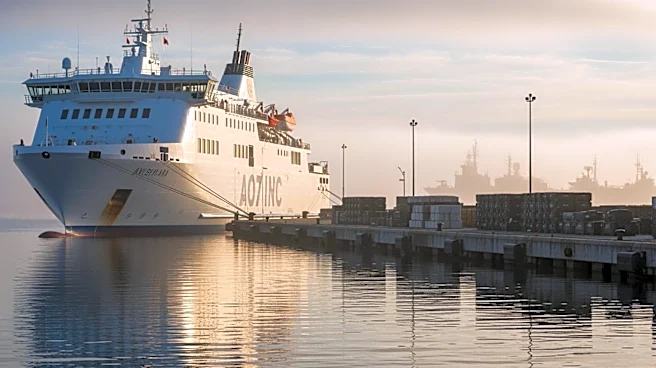
The British Army has chartered a civilian ferry for the first time in over 20 years to transport its forces as part of a NATO exercise in Germany. Over 1,400 troops from the 7th Light Mechanized Brigade, known as The Desert Rats, boarded a DFDS ferry in Newcastle
for a 16-hour journey across the North Sea to the Netherlands. From there, they traveled by rail to Germany to join French soldiers from the Foreign Legion for Exercise Rhino Storm. This exercise aims to test rapid deployment and live-firing skills. The use of the ferry, which can accommodate over 2,000 passengers, was a strategic choice to demonstrate the army's ability to mobilize large contingents efficiently. Brigadier Andrew Watson emphasized that the exercise showcases the British Army's capability to project force rapidly and collaborate with NATO allies.
Why It's Important?
This development highlights the British Army's strategic shift towards utilizing civilian resources for military operations, enhancing flexibility and efficiency in troop deployment. By opting for a civilian ferry, the army demonstrated an alternative to air transport, which would have required multiple flights. This approach not only reduces logistical complexity but also showcases the army's readiness to adapt to different transportation methods. The exercise underscores the importance of rapid deployment capabilities in modern military strategy, particularly in the context of NATO's collective defense commitments. It also reflects a broader trend of military forces leveraging civilian infrastructure to optimize operational readiness.
What's Next?
The successful use of a civilian ferry for military transport may encourage further integration of civilian resources in military logistics. This could lead to more frequent collaborations between military and civilian sectors, potentially influencing future defense strategies. The outcome of Exercise Rhino Storm will likely be analyzed to assess the effectiveness of such transport methods, possibly informing future NATO exercises. Additionally, the exercise may prompt other NATO members to explore similar logistical innovations, enhancing the alliance's overall operational capabilities.
Beyond the Headlines
The use of civilian ferries for military purposes raises questions about the balance between military needs and civilian infrastructure. While this approach offers logistical advantages, it also necessitates careful coordination to ensure that civilian services are not disrupted. Furthermore, the integration of civilian resources into military operations may prompt discussions on the legal and ethical implications of such practices, particularly in terms of civilian safety and the potential militarization of civilian spaces.