
What's Happening?
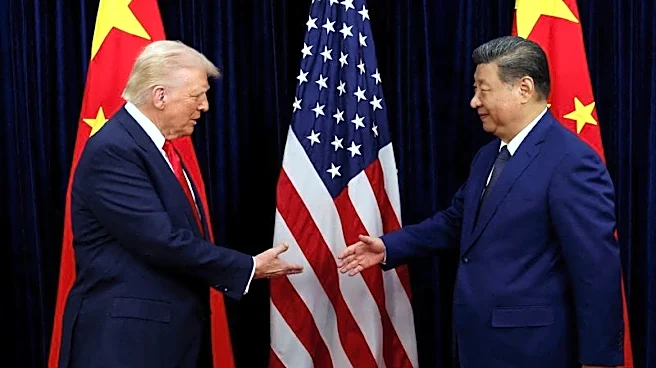
President Trump is set to visit China for a summit with President Xi Jinping, marking the first U.S. presidential trip to China in nearly a decade. The visit, originally delayed due to the ongoing conflict
with Iran, aims to stabilize relations between the two largest global economies. The meeting comes at a time when China has grown more confident and assertive on the world stage, with President Xi having consolidated power and expanded China's influence in technology and green energy. The summit will address ongoing tensions, including reciprocal tariffs and U.S. sanctions on Chinese entities. Analysts suggest that China may leverage its strengthened position to push for concessions from the U.S., particularly regarding Taiwan.
Why It's Important?
The summit is significant as it represents a critical juncture in U.S.-China relations, which have been strained by economic and geopolitical tensions. The outcome of the meeting could impact global markets, trade policies, and diplomatic relations. China's growing economic power and strategic investments in technology pose a challenge to U.S. dominance in these fields. The meeting also highlights the delicate balance of power, with China potentially using its control over rare earth minerals as leverage. The U.S. stands to gain or lose depending on the concessions made during the summit, affecting industries reliant on Chinese imports and exports.
What's Next?
Following the summit, both nations are expected to continue negotiations on trade and economic policies. The U.S. may face pressure to adjust its stance on Taiwan, while China could seek to solidify its position as a global leader in technology and green energy. The international community will closely watch the outcomes, as they could influence global economic stability and diplomatic alliances. Future interactions between the two leaders will likely be shaped by the results of this meeting, with potential implications for regional security and economic partnerships.