






What's Happening?
As Artificial Intelligence (AI) models become more affordable and accessible, their widespread adoption across businesses is projected to significantly increase electricity demand, potentially straining the U.S. power grid. Reports from McKinsey and Boston
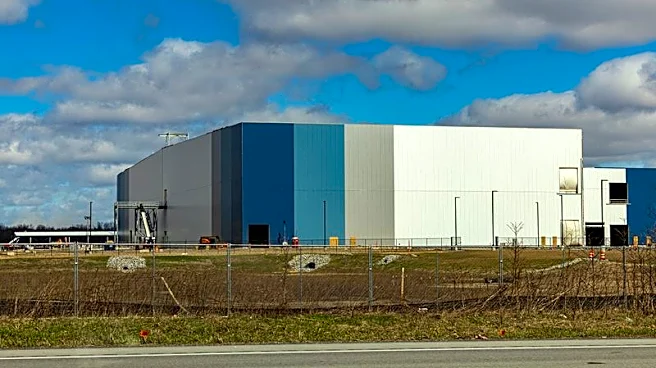
Consulting Group indicate that while individual AI tasks may become less power-intensive, the sheer volume of new applications will lead to a net increase in energy consumption. Data centers, which are crucial for AI operations, are already identified as the fastest-growing load segment in OECD power markets, with global data-center electricity demand expected to grow by 24% annually through 2030. This surge is driven by companies moving beyond experimental AI use to integrating it across more business functions, making cheaper tokens and falling prices for AI services more justifiable for higher-volume usage.
Why It's Important?
The anticipated strain on the U.S. power grid due to increased AI adoption has significant implications for national infrastructure, energy policy, and economic stability. A stressed power grid could lead to higher energy costs for consumers and businesses, potential blackouts, and hinder the growth of other energy-intensive industries. This situation necessitates substantial investment in upgrading and expanding electricity infrastructure, including generation, transmission, and distribution. It also highlights the urgent need for more energy-efficient AI technologies and data center designs. The challenge extends to regulatory bodies and utility companies, which must plan for and manage this escalating demand to prevent disruptions and ensure a reliable energy supply for the nation's technological advancement.
What's Next?
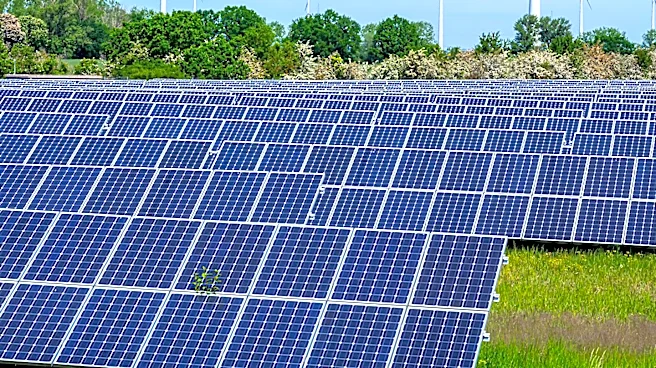
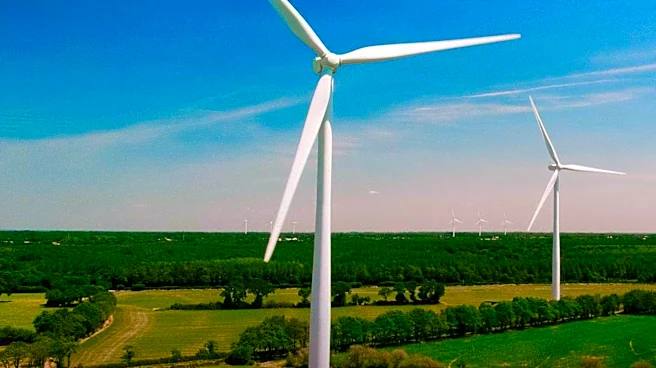
In response to the growing electricity demand from AI, companies are expected to continue pushing for more efficient AI models, chips, and data centers. However, the reports suggest that these efficiency gains may not offset the overall increase in power consumption due to broader AI deployment. Utility companies and government agencies will likely face pressure to accelerate investments in renewable energy sources and grid modernization projects to meet the rising demand sustainably. Discussions around energy policy and infrastructure development will become critical, potentially leading to new regulations or incentives for energy-efficient AI practices. The long-term picture for data center growth beyond 2030 remains uncertain, contingent on whether AI consistently delivers sufficient value to justify its energy footprint.
Beyond the Headlines
The escalating energy demands of AI raise profound ethical and environmental questions. The pursuit of advanced AI capabilities must be balanced with the imperative for environmental sustainability. This situation could accelerate the transition to cleaner energy sources, but also risks increasing reliance on existing, potentially carbon-intensive, power generation if infrastructure upgrades lag. Furthermore, the concentration of data centers in specific regions could create localized environmental impacts and resource competition. The challenge extends to the design and development of AI itself, prompting a call for 'green AI'—models and algorithms that are inherently more energy-efficient. This issue underscores the interconnectedness of technological progress, environmental stewardship, and national infrastructure planning, demanding a holistic approach to ensure a sustainable future.