
What's Happening?
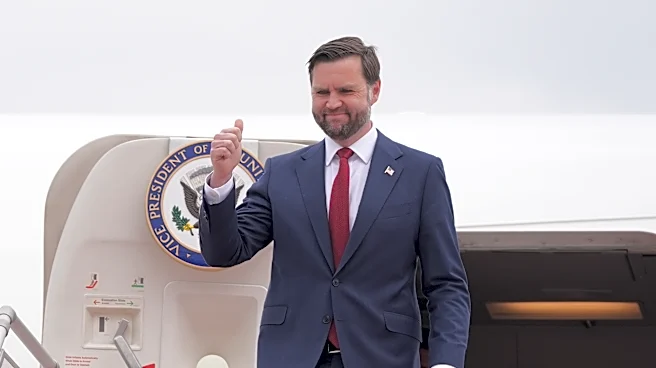
The U.S. and Iran have not reached a deal after the latest round of talks in Islamabad. Vice President JD Vance reported that Iran refused to accept U.S. terms, particularly concerning nuclear weapons
development. Iran outlined its 'red lines,' including control over the Strait of Hormuz, release of blocked assets, and regional ceasefire enforcement. The talks, mediated by Pakistan, involved high-level officials from both countries. Despite efforts, significant distrust and unresolved issues persist, hindering progress towards peace.
Why It's Important?
The stalled negotiations highlight the deep-seated challenges in U.S.-Iran relations, with implications for regional stability and global security. Iran's demands for control over strategic waterways and reparations reflect broader geopolitical tensions. The U.S. aims to prevent nuclear proliferation, a critical security concern. The failure to reach an agreement could lead to further instability in the Middle East, affecting international diplomatic efforts and economic interests.
What's Next?
The U.S. and Iran may continue to seek diplomatic solutions, but significant obstacles remain. The international community will likely increase pressure on both sides to find a resolution. The potential for renewed conflict remains high, with strategic and economic implications for the region and beyond.