






What's Happening?
Taiwan's Ministry of National Defense (MND) reported detecting two sorties of Chinese People's Liberation Army (PLA) aircraft and five PLA Navy ships operating around the island in the 24 hours leading up to 6 a.m. on October 18. Both of the detected
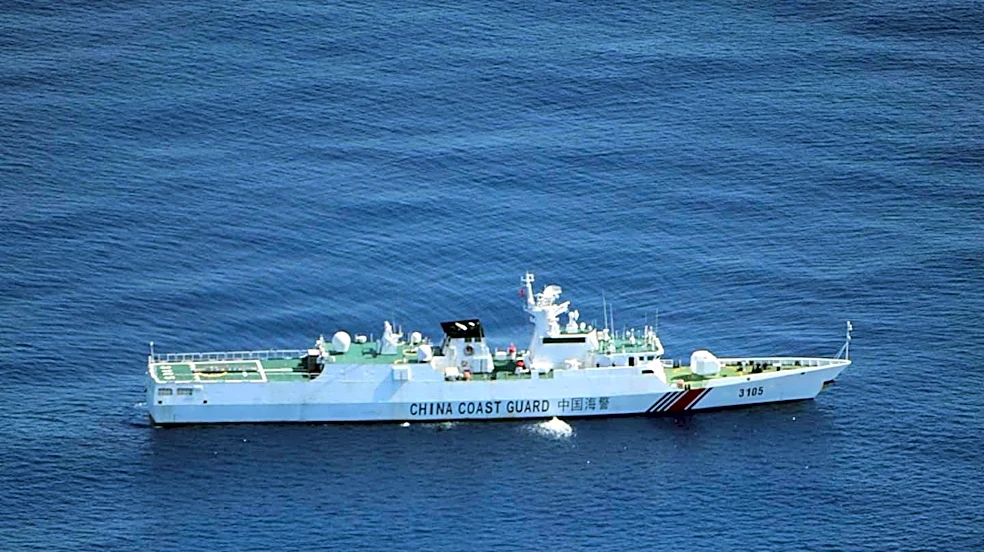
aircraft crossed the median line of the Taiwan Strait and entered Taiwan’s air defense identification zone (ADIZ) in the northern and central sectors. Additionally, nine 'official ships' were observed in the vicinity. The MND stated that Taiwan's armed forces monitored these activities and responded by deploying combat air patrol aircraft, navy ships, and coastal missile systems. This report is part of Taiwan's daily public updates on PLA activities around the island, which often include maps of air and maritime movements. The figures for this period were lower than the previous day, which saw nine PLA aircraft sorties, five of which crossed the median line, along with six PLA Navy ships and eight official ships.
Why It's Important?
The consistent presence and activities of Chinese military aircraft and naval vessels around Taiwan, particularly the crossing of the median line and entry into Taiwan's ADIZ, signify China's ongoing efforts to assert its sovereignty claims over the self-governed island. These actions are a form of psychological warfare and a demonstration of force, aiming to normalize China's military presence in the region and challenge Taiwan's control over its airspace and territorial waters. For the U.S., which maintains an unofficial but robust relationship with Taiwan and provides defensive arms, these maneuvers underscore the escalating tensions in the Indo-Pacific. The U.S. has repeatedly expressed concerns about China's destabilizing actions in the Taiwan Strait, as any conflict in this region could have significant global economic and geopolitical repercussions, affecting international trade routes and supply chains, especially for critical technologies like semiconductors.
What's Next?
Taiwan is expected to continue its vigilant monitoring of Chinese military activities and maintain its readiness to respond to any incursions. The MND's daily reports serve to inform the public and international community about the ongoing situation, reinforcing Taiwan's stance against Beijing's claims. China is likely to persist with its military exercises and patrols around Taiwan, using these as a means to project power and signal its resolve. The frequency and scale of these operations may fluctuate, but the underlying strategy of gradually increasing pressure on Taiwan is expected to continue. The international community, particularly the U.S. and its allies, will likely maintain their calls for de-escalation and adherence to international law, while also potentially increasing their support for Taiwan's defense capabilities and regional security cooperation to deter any aggressive actions.
Beyond the Headlines
The routine nature of these Chinese military activities, as evidenced by Taiwan's daily reports, risks creating a 'new normal' in the Taiwan Strait, where such incursions become less newsworthy but cumulatively more significant. This normalization could desensitize the international community to the escalating threat, potentially allowing China to incrementally advance its objectives without triggering a strong global response. Furthermore, the 'official ships' mentioned in the report, alongside military assets, highlight China's 'gray zone' tactics, which blend civilian and military capabilities to achieve strategic goals without overt military conflict. This ambiguity makes it challenging for Taiwan and its allies to formulate a clear and proportionate response, as direct military engagement with ostensibly civilian vessels could be misconstrued or lead to unintended escalation. The long-term implication is a gradual erosion of the existing status quo, with potential consequences for regional stability and international maritime norms.