








What's Happening?
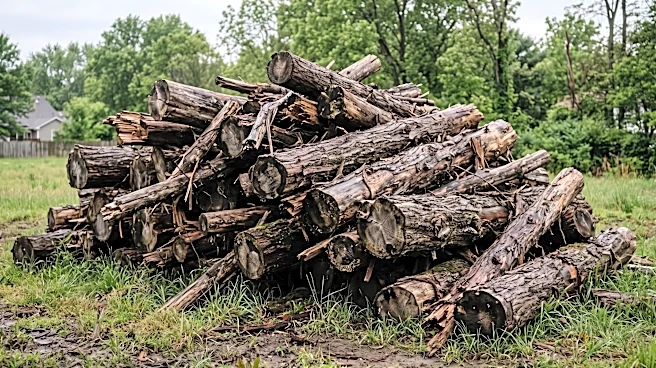
The Economic Development Committee in Wausau, Wisconsin, has reached a stalemate regarding proposed deadlines to clear logs and end city training activities at the 1300 Cleveland Avenue property. Council President Terry Kilian proposed ending city training by
February 1 and giving the parks department six months to relocate its log storage. This proposal resulted in a 2-2 tie vote within the committee. Additionally, a subsequent proposal for a deed restriction to prohibit future industrial use of the property also ended in a 2-2 deadlock. Despite the committee's inability to reach a consensus, city staff indicated that the deed restriction will still be presented to the Wausau City Council on November 24. The property, formerly part of Connor Forest Industries, was rezoned from industrial to residential in 2018, but existing activities were grandfathered in as legal nonconforming uses. Neighbors have consistently opposed the industrial use of the site, and Alder Vicki Tierney emphasized the need to clean up the property and fulfill promises made to the neighborhood.
Why It's Important?
This deadlock highlights ongoing tensions between city operational needs and residential quality of life in Wausau. The inability of the committee to set clear deadlines prolongs uncertainty for residents who have been advocating for the cessation of industrial activities at the site for years. The debate also underscores the challenge cities face in managing public works operations, such as log storage for tree removal, while addressing community concerns about noise, aesthetics, and property use. The potential for a deed restriction to prevent future industrial use is significant, as it would permanently alter the property's development potential and could set a precedent for how the city manages transitions of formerly industrial sites in residential areas. The outcome of the City Council's vote on November 24 will be crucial in determining the future character of the neighborhood and the city's approach to similar land-use conflicts.
What's Next?
The proposed deed restriction, which aims to bar future industrial uses such as manufacturing, processing, fabrication, and large-scale warehousing, will proceed to the Wausau City Council for a vote on November 24, despite the committee's deadlock. City staff will also redraft a companion resolution that would require a gated entrance and council approval for any city department training on the site, reflecting the committee's recent votes. In the interim, the Wausau/Marathon County Department of Parks, Recreation and Forestry continues to use the site for log storage, as Parks Director Jamie Polley stated the department needs clear direction on an alternative location. A consultant, approved for U.S. Environmental Protection Agency technical assistance, is expected to present findings on reuse options for the property in March, which could offer new pathways for resolution.
Beyond the Headlines
The ongoing dispute over the 1300 Cleveland Avenue property in Wausau reflects a broader national trend of 'townsizing' or urban infill development, where former industrial or underutilized sites in established neighborhoods are repurposed. This often leads to conflicts between existing municipal operations and the desires of residents for quieter, more residential environments. The challenge for city planners and councils is to balance the practical needs of public services, such as waste management or equipment storage, with community expectations for quality of life and property values. The situation also raises questions about the long-term planning for municipal infrastructure and the proactive identification of suitable sites for necessary but potentially undesirable operations, rather than relying on historical uses that may no longer align with neighborhood character. The outcome in Wausau could influence how other municipalities approach similar land-use transitions and community engagement.