


What's Happening?
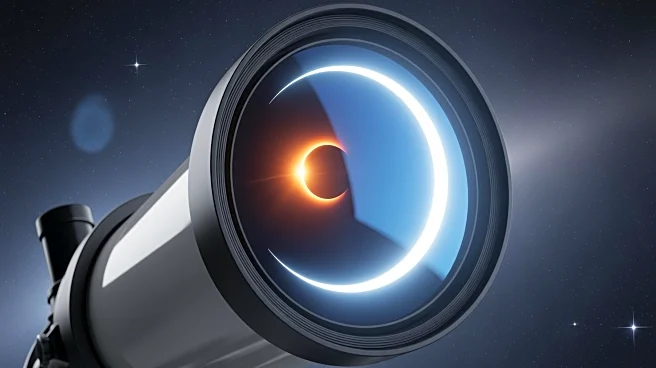
The Dynamic Eclipse Broadcast (DEB) Initiative has released a suite of open resources developed during the 2024 solar eclipse. These resources include Python programs, software installation guides, training materials, and an observation checklist, all aimed
at aiding future eclipse observations. The initiative involved 82 volunteer teams across North America who collected a vast dataset of images during the eclipse. The materials are available on Zenodo, and the DEB Initiative plans to publish a paper on their software development and data handling for the April 8, 2024, total solar eclipse. The initiative continues to analyze data on the Sun’s corona and plans to publish their findings in spring 2026. The DEB Initiative is supported by NASA's Heliophysics Citizen Science Investigations program and the National Science Foundation.
Why It's Important?
The release of these resources is significant as it democratizes access to scientific tools and data, enabling more widespread participation in solar observations. This initiative not only enhances public engagement with science but also contributes to the broader scientific understanding of solar phenomena. By involving citizen scientists, the DEB Initiative fosters educational opportunities and inspires future generations to pursue careers in science. The data collected and analyzed could provide valuable insights into solar activity, which has implications for understanding space weather and its effects on Earth.
What's Next?
The DEB Initiative plans to continue its solar observations and is preparing for coronal observations in North Africa for the 2027 total solar eclipse. The ongoing analysis of the Sun’s corona will likely lead to further scientific publications, contributing to the field of heliophysics. The initiative's efforts may also inspire similar citizen science projects, expanding the scope of public involvement in scientific research.