








What's Happening?
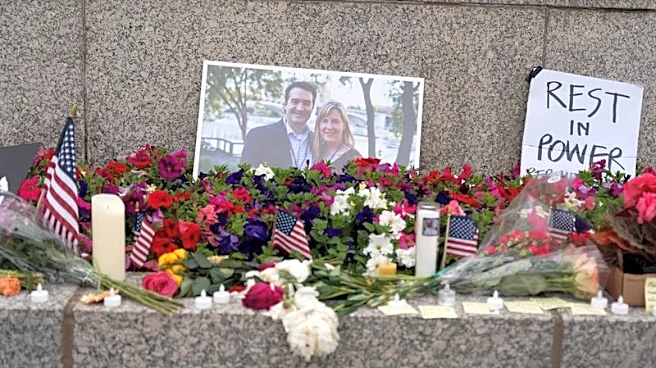
U.S. prosecutors have decided not to pursue the death penalty in a plea agreement with Vance Luther Boelter, who is charged with the political assassinations of former Minnesota House Speaker Melissa Hortman and her husband, as well as the attempted murders
of State Senator John Hoffman and his wife. The decision was communicated in a letter to the court by Assistant U.S. Attorneys Bradley M. Endicott and Matthew D. Forbes. Boelter, who was captured after a large-scale manhunt, faces multiple federal and state charges, including murder and attempted murder. The plea agreement's details remain undisclosed, and Boelter's attorneys have not commented. The case has drawn attention due to its political nature and the fact that Minnesota abolished capital punishment in 1911, with no federal death penalty cases in its history.
Why It's Important?
The decision not to seek the death penalty in this high-profile case underscores the complexities surrounding capital punishment in the U.S., particularly in states like Minnesota that have long abolished it. This case highlights the ongoing debate over the federal government's role in capital punishment, especially under administrations that have pushed for its broader application. The outcome of this case could influence future federal prosecutions in states without the death penalty, potentially affecting how justice is administered in politically motivated crimes. Additionally, the case has significant implications for political safety and the protection of public officials, raising concerns about the security measures in place for lawmakers.
What's Next?
Vance Boelter is scheduled for a change-of-plea hearing, which will likely provide more clarity on the terms of the plea agreement. The resolution of his federal charges will also impact the pending state charges. The case may prompt discussions among lawmakers and legal experts about the adequacy of current laws and protections for public officials. It could also lead to legislative reviews or proposals aimed at enhancing security measures for politicians, especially in light of the political motivations behind the attacks.
Beyond the Headlines
This case brings to light the broader issue of political violence and its impact on democratic institutions. The targeting of public officials for their political affiliations poses a threat to the democratic process and could deter individuals from public service. The psychological and physical toll on the victims and their families also highlights the need for comprehensive support systems for those affected by such crimes. Furthermore, the case may influence public opinion on the use of capital punishment in politically charged cases, potentially affecting future policy decisions.